Binary Pulsar Observations and their Importance for Fundamental Physics and Astrophysics

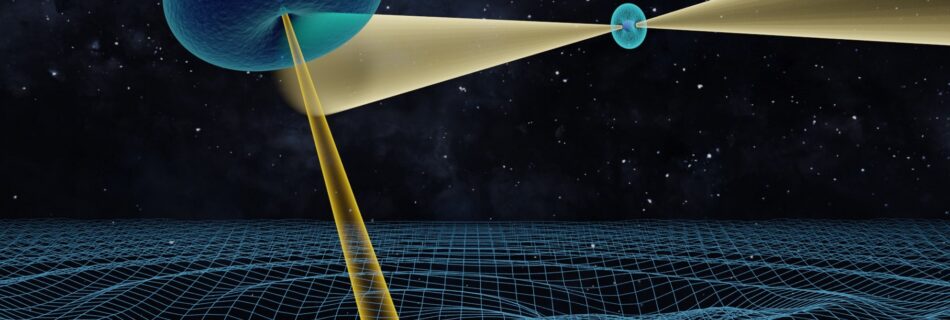
Prof. Dr. Michael Kramer, Invited Balzan Lecture on 50 Years of Binary Pulsars, Paris, France: Binary pulsars were discovered 50 years ago, providing first evidence for a number of strong-field gravity effects, in particular the existence of gravitational waves. Today, nearly 300 binary pulsars are known, including the famous double pulsar, which is the most …

Loading

Missing Ions in Space and Laboratory

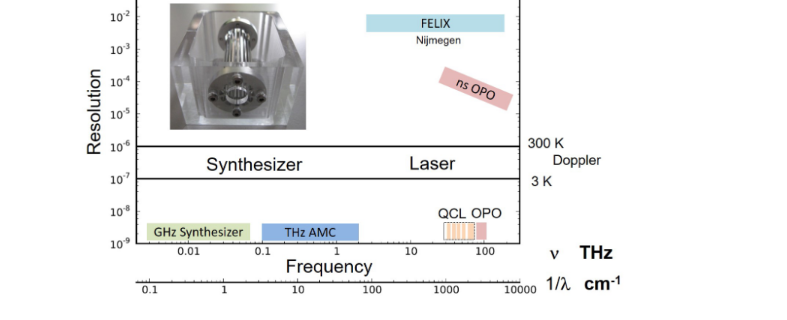
Prof. Dr. Stephan Schlemmer, Invited Lecture, 27th International Conference on High Resolution Molecular Spectroscopy, Bologna, Italy: Action spectroscopy in cryogenic higher-order multipole ion traps as depicted in the insert of the Figure below was instrumental to overcome limitations of traditional ways of ion spectroscopy. Mass selection paired with low tempera-ture storage and near unity ion …

Loading

Missing Ions in Laboratory and Space

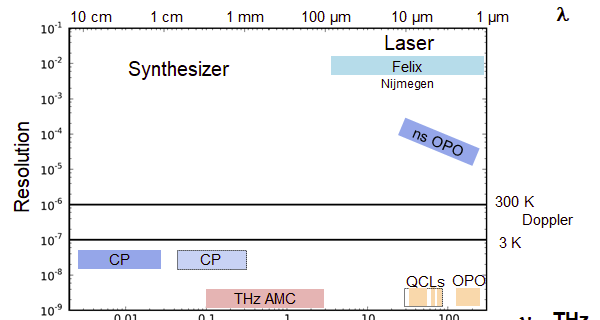
Prof. Dr. Stephan Schlemmer, Invited Lecture, “32nd Summer School and International Symposium on the Physics of Ionized Gases”, Belgrade, Serbia: Molecular ions play a vital role in space because they are readily formed by the ubiquitous cosmic ray ionisation and often undergo rapid chemical reactions even at the low temperatures of the interstellar medium. It …

Loading

Non-Rigid Shape Correspondence Between Local and Global Scale

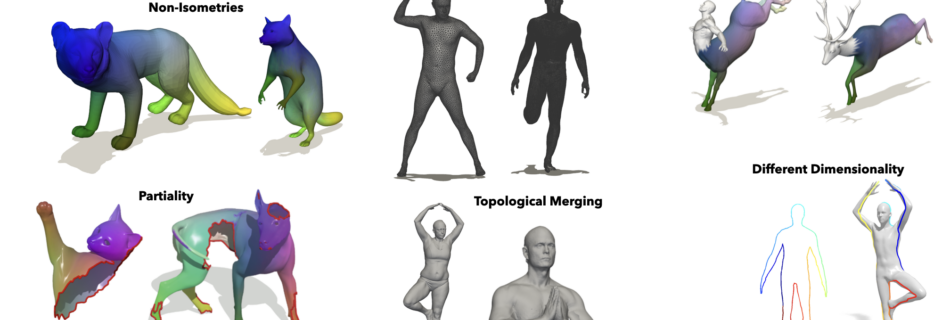
Jun.-Prof. Dr. Zorah Lähner, Colloquium, Symposium on 3D Object Retrieval, Santiago, Chile: In this talk I will give an overview about the state of non-rigid correspondence methods in the era of deep learning, where current methods shine and what limitations still exist today. These range from the question whether a found solution is actually the …

Loading

“eROSITAs Röntgenaugen fokussiert auf die dunkle Seite des Universums” (eROSITA’s X-ray eyes focussed on the dark side of the universe)

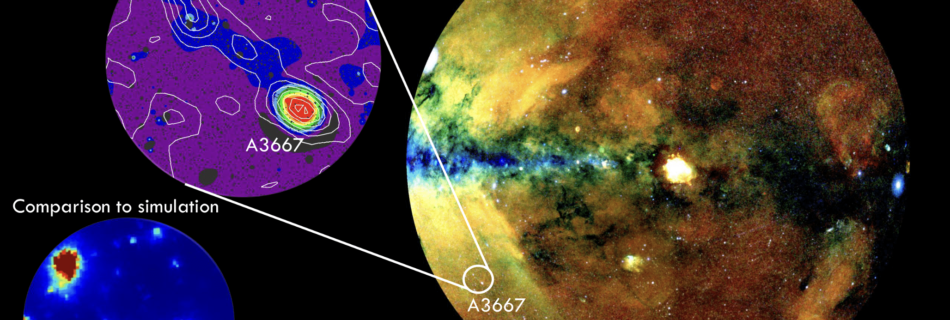
Prof. Dr. Thomas Reiprich, Public Lecture, Bonner Volkssternwarte, Bonn, Germany: “Im Juli 2019 wurde das Röntgenweltraumteleskop eROSITA nach über 10 Jahren Entwicklungszeit erfolgreich gestartet. Bereits die allerersten Bilder zeigen, mit welch grosser Detailschärfe dieses neue Teleskop das Universum auf grossen Skalen vermessen kann, und welche großen Fortschritte wir uns davon erhoffen können. eROSITA wird die …

Loading

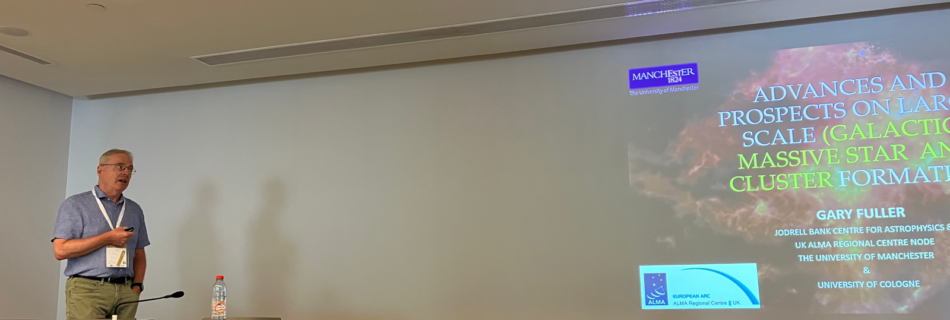
Advances and Prospects on Large Scale Star Formation

Prof. Dr. Gary Fuller, Invited Lecture, Spanish Astronomical Society Meeting, Granada, Spain: Most stars in our galaxy form as part of a cluster of stars and these clusters often contain one or more high mass (M>8 Msol) stars. The energy injected back into their environment over the lifetimes of these stars profoundly impacts the evolution …

Loading

Exploring farther: machines for new knowledge – Large-Scale Computing Infrastructures and Scalable AI Technologies

Dr. Andreas Lintermann, Invited Lecture, 70th Anniversary CERN, CERN, Geneve, Switzerland: With the continuously increase in availability of data, e.g., produced by the collision experiments at CERN already nowadays and the extreme multiplication of the data volume CERN is facing with their future experiments, more mature technologies are needed to find the needle in the …

Loading

The SRG/eROSITA All-Sky Survey, view of the Fornax galaxy cluster

Prof. Dr. Thomas Reiprich, Lecture, conference on GALAXY GROUPS IN THE ERA OF EROSITA AND EUCLID: A MULTIWAVELENGTH VIEW, Sesto, Italy: The Fornax cluster is one of the most nearby X-ray bright galaxy groups. Its proximity allows us to study its properties at high spatial resolution. We exploit the essentially unlimited field-of-view of five eROSITA …

Loading

Machine Learning in between Discrete and Continuous Settings

Jun.-Prof. Dr. Zorah Lähner, Colloquium, DataNinja Saionara Conference, Bielefeld, Germany: When solving discrete problems with deep learning, making the problem differentiable is one of the core challenges. This talk will look at different problems sets with complex discrete aspects, for example permutation, and how a change in representation can make these problems feasible for optimisation with …

Loading

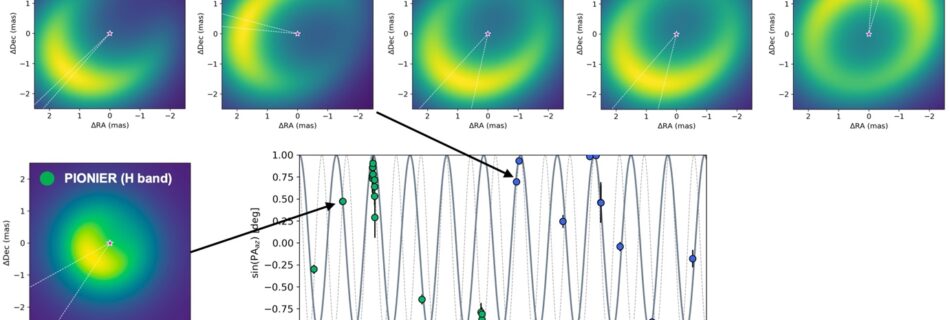
The GRAVITY young stellar object survey: probing the innermost regions of a sample of protoplanetary disks

Prof. Dr. Lucas Labadie, Invited Lecture, “From GRAVITY(+) Towards a Kilometers Baseline, Large Telescope Interferometer”, Ringberg, Germany: Deciphering the physical processes occurring in the inner regions of protoplanetary disks is key to understand the environmental conditions of (terrestrial) planet formation and evolution. Thanks to its unique milliarcsecond angular resolution, VLTI/GRAVITY has studied the ~0.1 – …

Loading