
The Hum of Space-Time : A New Window on Einstein’s Universe

Prof. Dr. Michael Kremer, Invited Lecture, Fourth European Physical Society Conference on Gravitation: Black Holes, Valencia, Spain: This talk presents the recent evidence for a nHz-gravitational wave background that appears to originate from the superposition of signals emitted from supermassive black hole binaries during galaxy mergers in the early Universe. This discovery opens up a new …

Loading

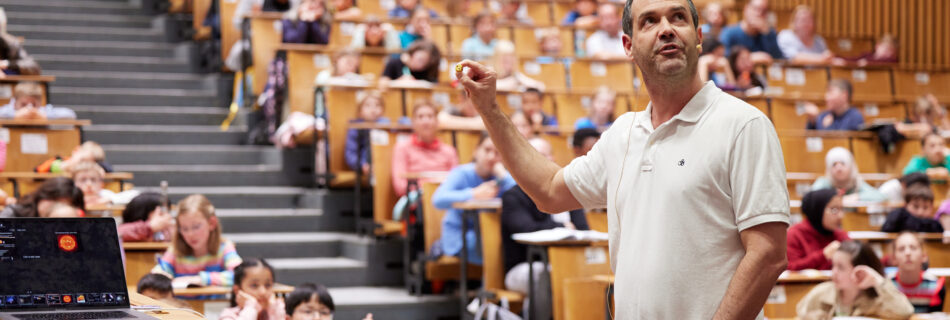
“Galaxien und ihre Sterne” (Galaxies and their stars)

Prof. Dr. Frank Bigiel, Kinderuni Vorlesung (Children’s university lecture) Uni Bonn, Bonn, Deutschland: “Was sind Galaxien und Sterne und welche gibt es? Wie entstehen Sterne in Galaxien? Und vor allem: Wie kann man all das mit Teleskopen beobachten? Diesen und anderen spannenden Fragen gehen wir in unserer Astronomievorlesung der Kinderuni nach!” What are galaxies and …

Loading

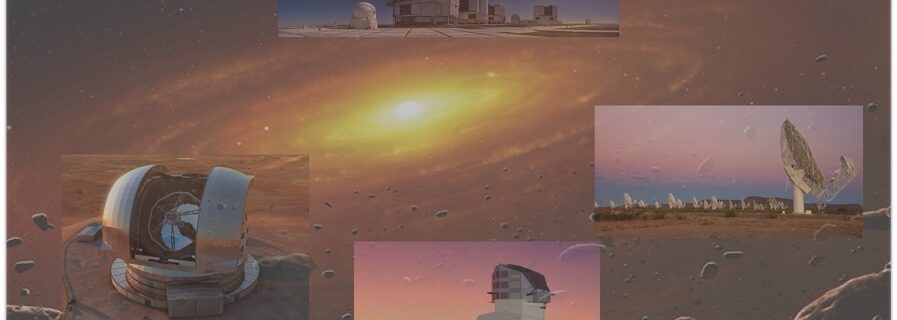
Future instrumental perspectives for the observational study of young stars

Prof. Dr. Lucas Labadie, Guest professor, “The inner disk of young stars: accretion, ejection, and planet formation”, IESC, Cargèse, Corsica, France: Our understanding of the physical processes that regulate the evolution of the circumstellar environment of YSOs has made very significant progress in the last decade. For instance, the distribution of gas and dust in …

Loading

Talk Polsterer

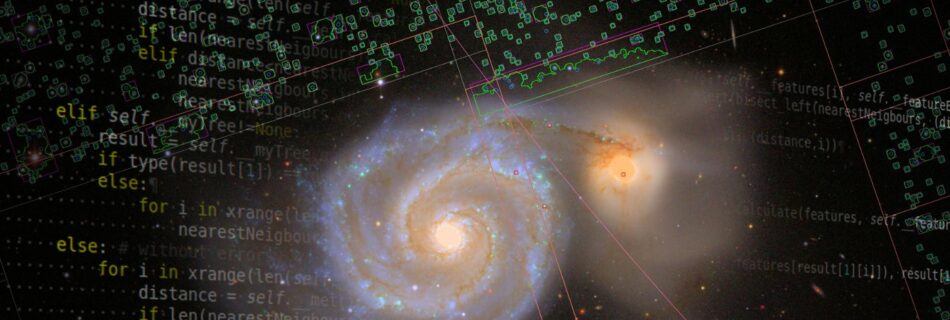
Accessing complex structures with unsupervised and deep-learning techniques

Dr. Kai Polsterer, Invited Keynote, ASI 2023, Indore, India: The amount and size of astronomical data-sets was growing rapidly in the last decades. Now, with new technologies and dedicated survey telescopes, the databases are growing even faster. VO-standards provide uniform access to this data. What is still required is a new way to analyze and …

Loading

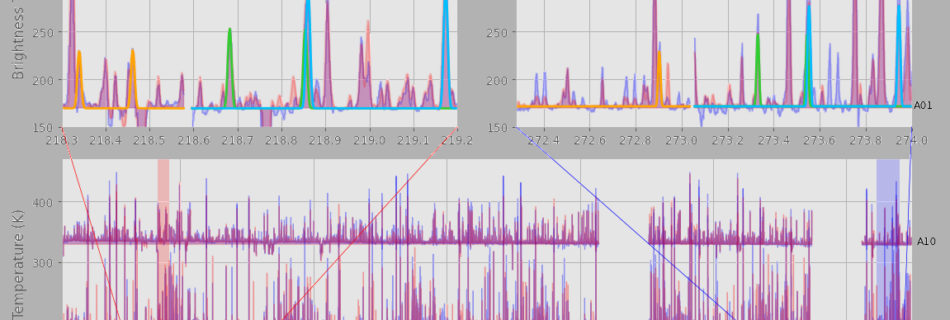
XCLASS

Prof. Peter Schilke, Invited lecture at VAMCD consortium meeting, Cologne, Germany: Analyzing the large amounts of spectral data coming from modern instruments such as ALMA is a challenge, and remains a bottleneck in the path from observation to publication. There are two aspects to this: obtaining and providing the required fundamental data (frequencies, line strengths, …

Loading