On Monday September 14, Ina Brandes, Minister of Culture and Science of the State of North Rhine-Westphalia, visited the University of Cologne to learn more about the research of Dynaverse.
The visit brought together representatives from the Universities of Cologne and Bonn, members of the cluster, researchers, and invited guests. Alongside discussions about the scientific goals of Dynaverse, the visit offered a closer look at current research projects, laboratory infrastructure, astronomical instrumentation, artificial intelligence, virtual reality, and other areas shaping modern astrophysics.
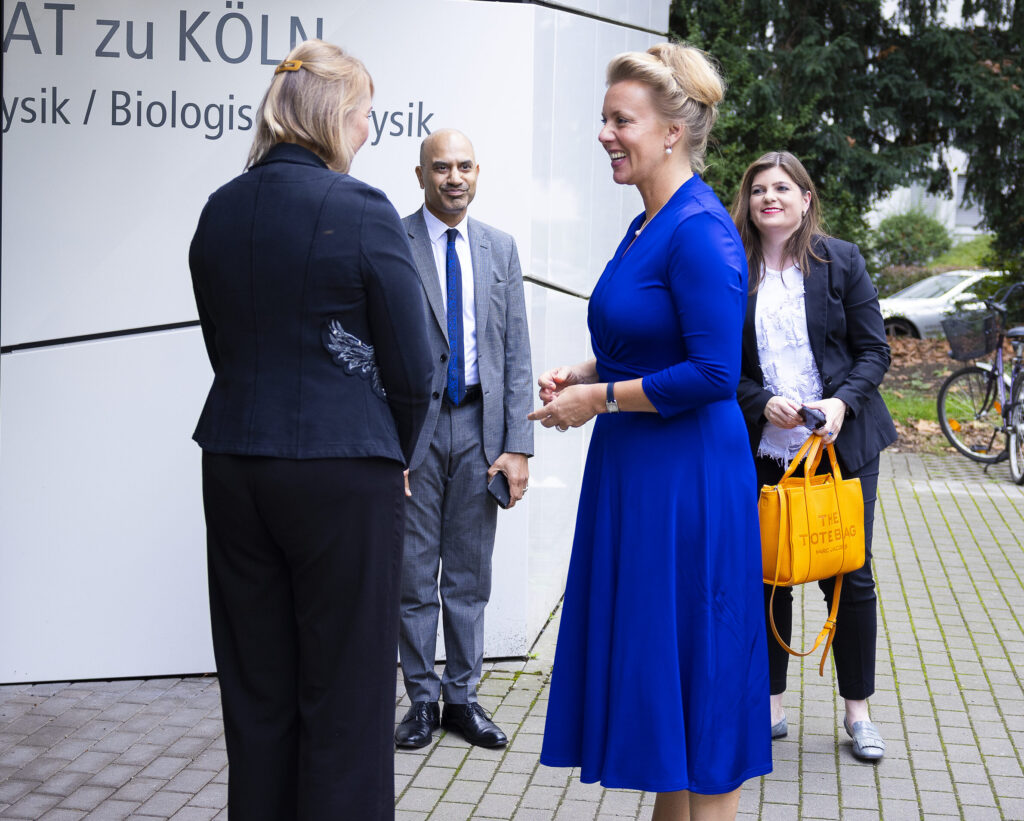
Official Greetings and Introduction
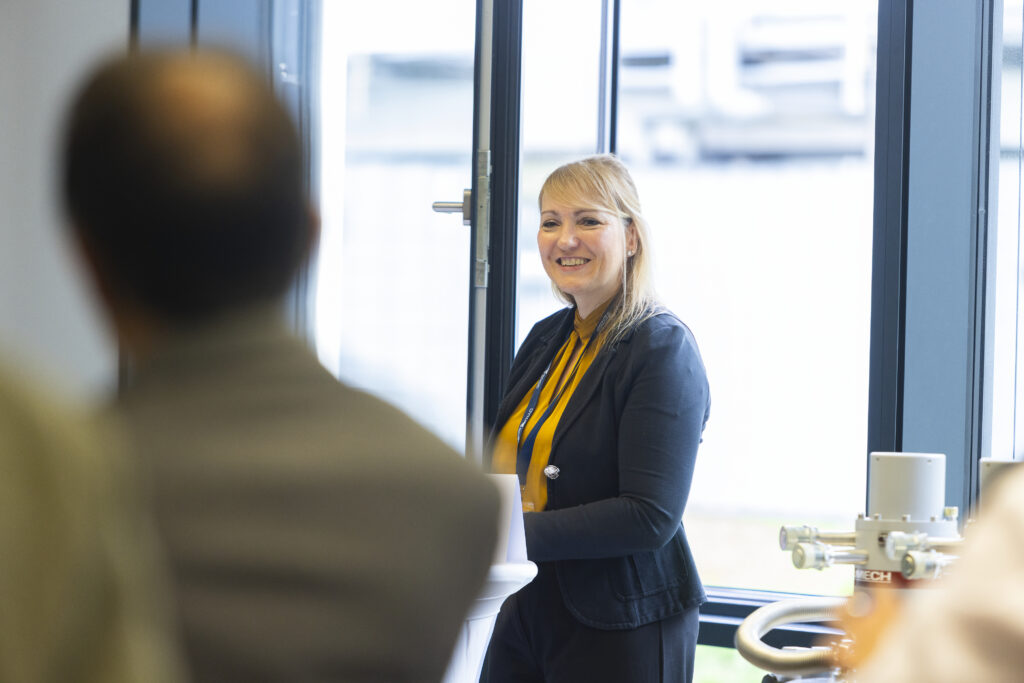
Prof. Dr. Joybrato Mukherjee, Rector of the University of Cologne, welcomed the Minister together with Prof. Dr. Ilona Grunwald Kadow, Vice Rector of Research and Early Scientists at the University of Bonn, and Prof. Dr. Georg Bareth, Dean of the Faculty of Mathematics and Natural Sciences at the University of Cologne. Minister Ina Brandes then addressed the participants before the program moved on to an introduction to the Excellence Cluster Dynaverse.
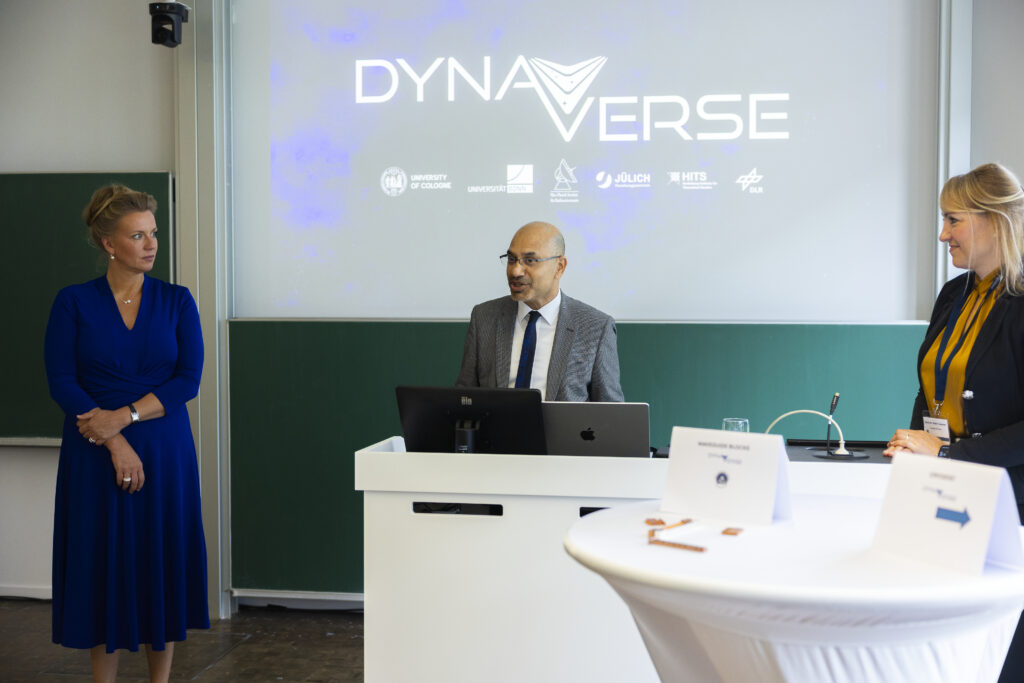
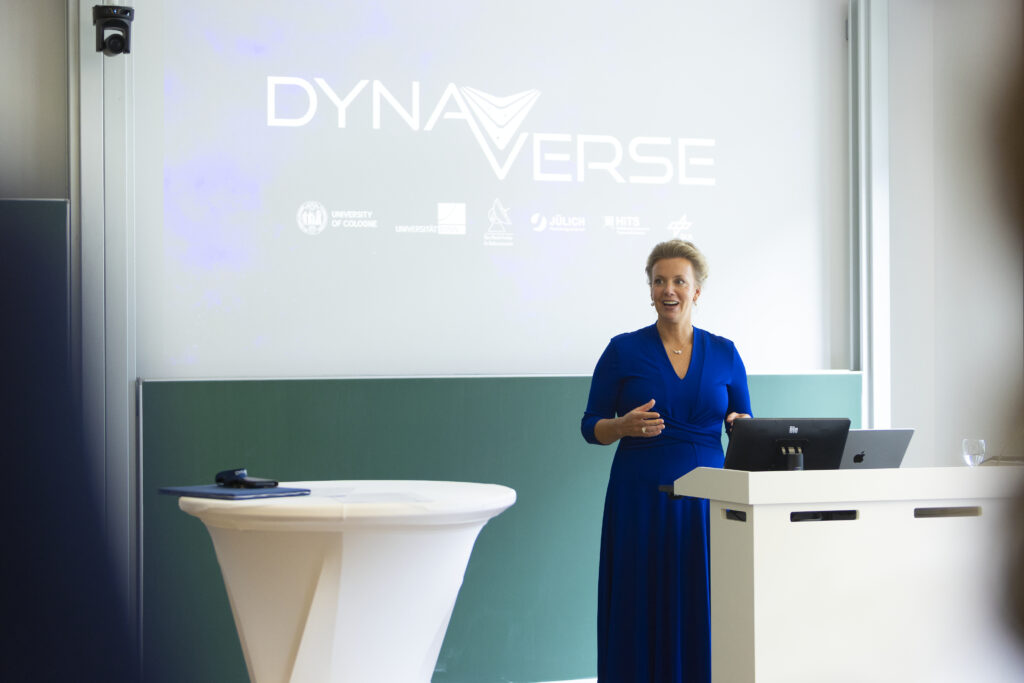
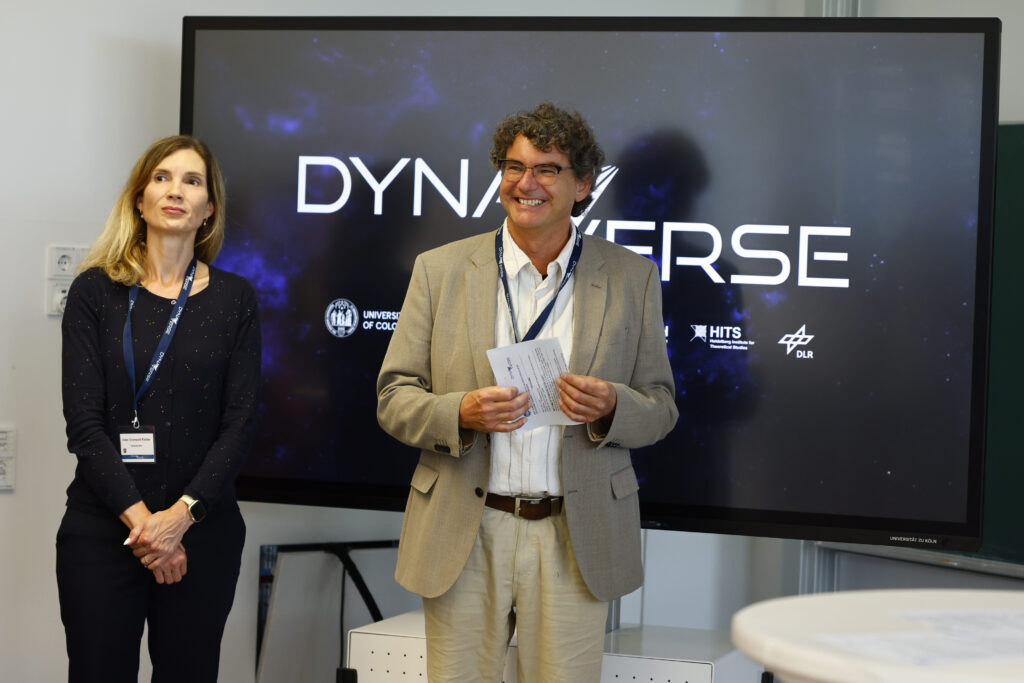
Spokesperson of Dynaverse Prof. Stefanie Walch-Gassner (UoC) presented key research areas and scientific highlights of the Excellence Cluster Dynaverse. The following discussion offered insights into current projects, scientific infrastructure, and support for early-career scientists.
Lab Tour/Stations
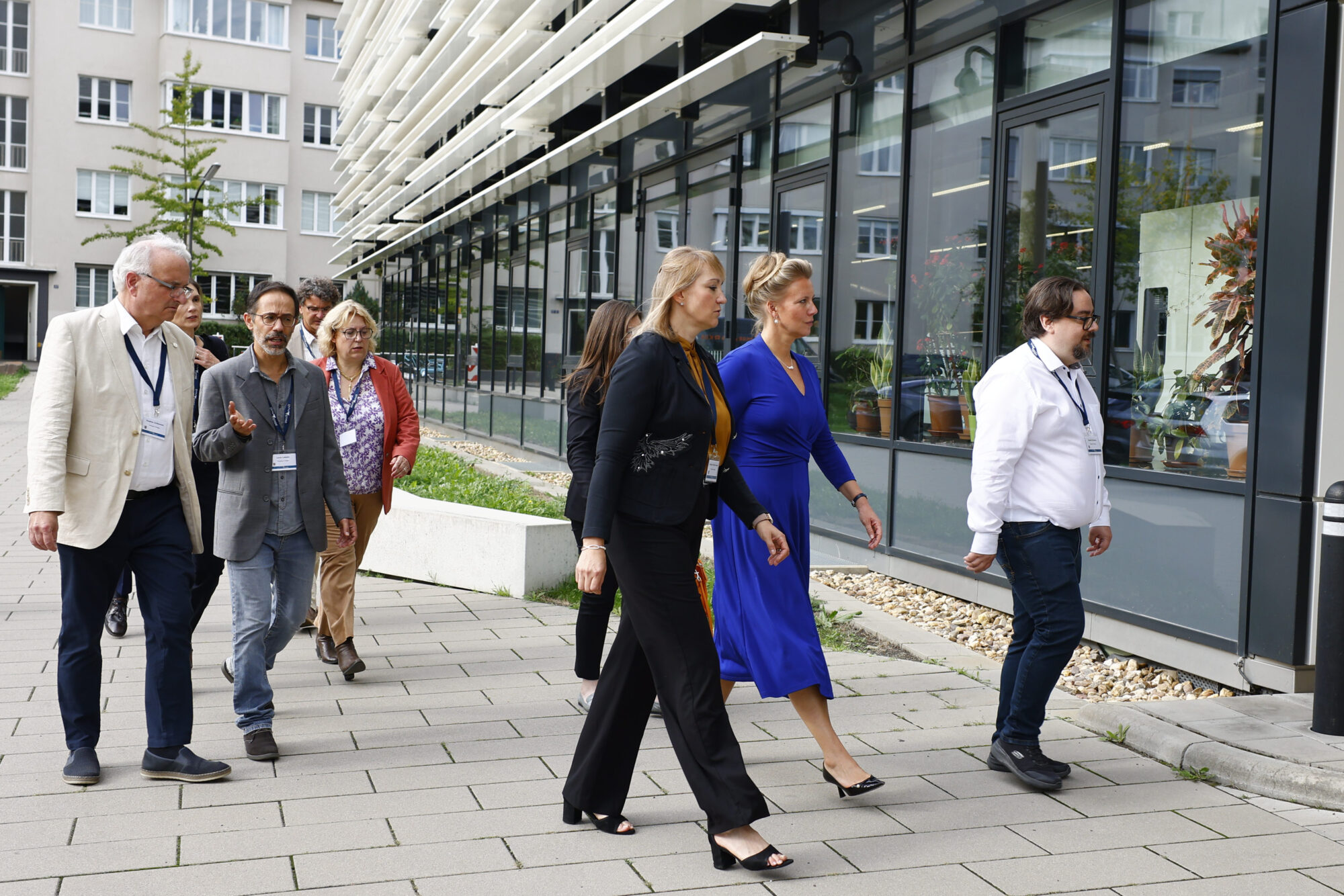
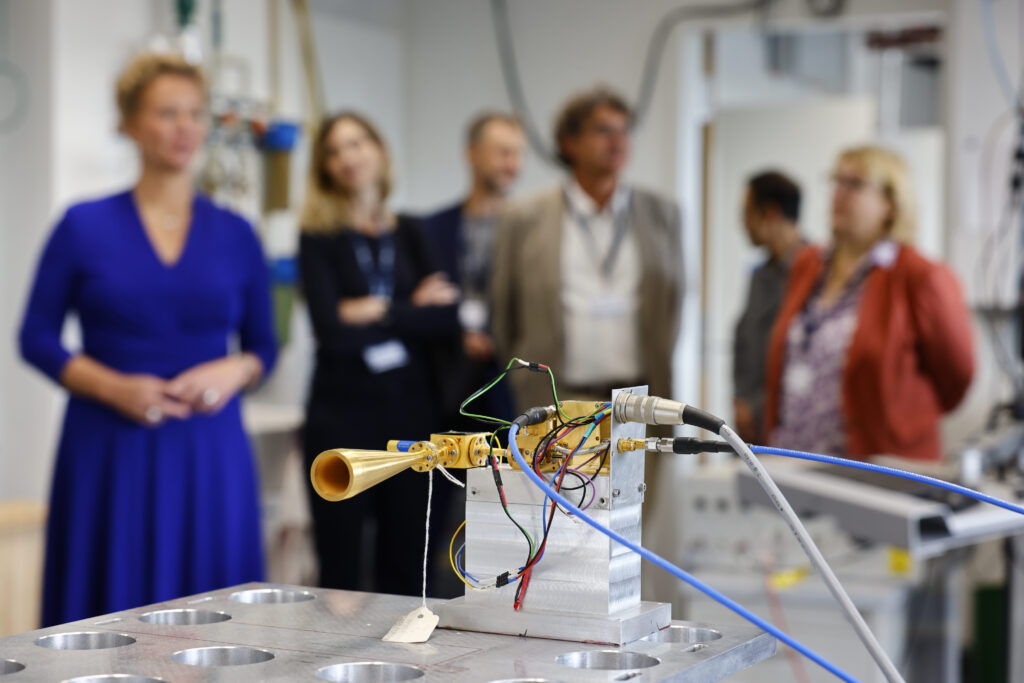
Following the introduction, Ina Brandes was given a tour of the new astrophysical laboratory – a center for the research of Clusters ML4Q and Dynaverse.
Astrophysics at the University of Cologne combines expertise across the entire research process. It starts at the development of sensors and astronomical instruments and concludes with data analysis, laboratory astrophysics, and theoretical modelling. Over the years, researchers in Cologne have contributed equipment for major observatories and missions including SOFIA and Herschel, and are now involved in work connected to the James Webb Space Telescope. Cologne scientists are also developing instrumentation for ESO’s Extremely Large Telescope (ELT), including METIS, a mid-infrared spectrograph and imaging instrument. This broad range of expertise is complemented by research infrastructure developed in Cologne itself. One example is the Cologne Database for Molecular Spectroscopy (CDMS), which provides molecular spectroscopic data used in the interpretation of radio-astronomical observations.
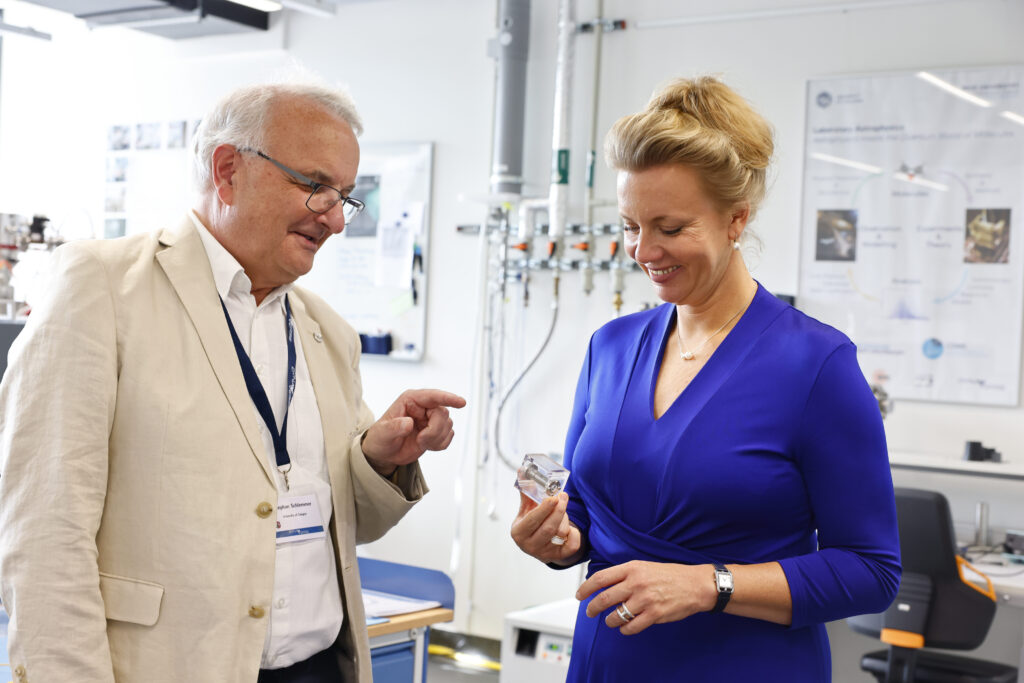
Prof. Labadie (UoC) and Prof. Schlemmer (UoC) showed Ina Brandes the detailed research which went into the development of METIS and the filigreen tools which are used in modern spectroscopy.
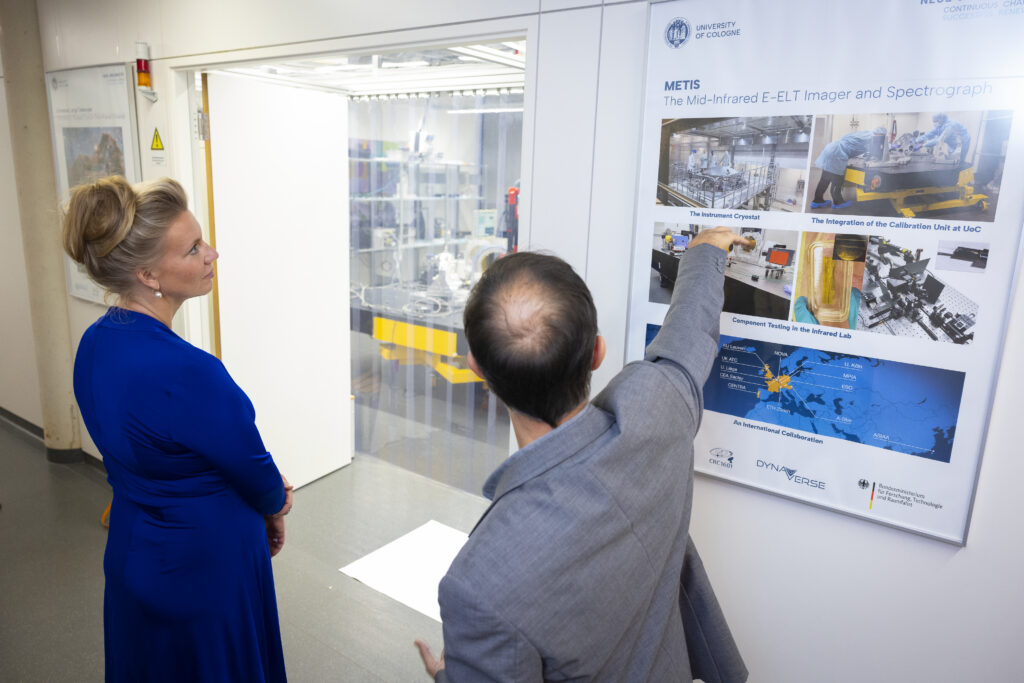
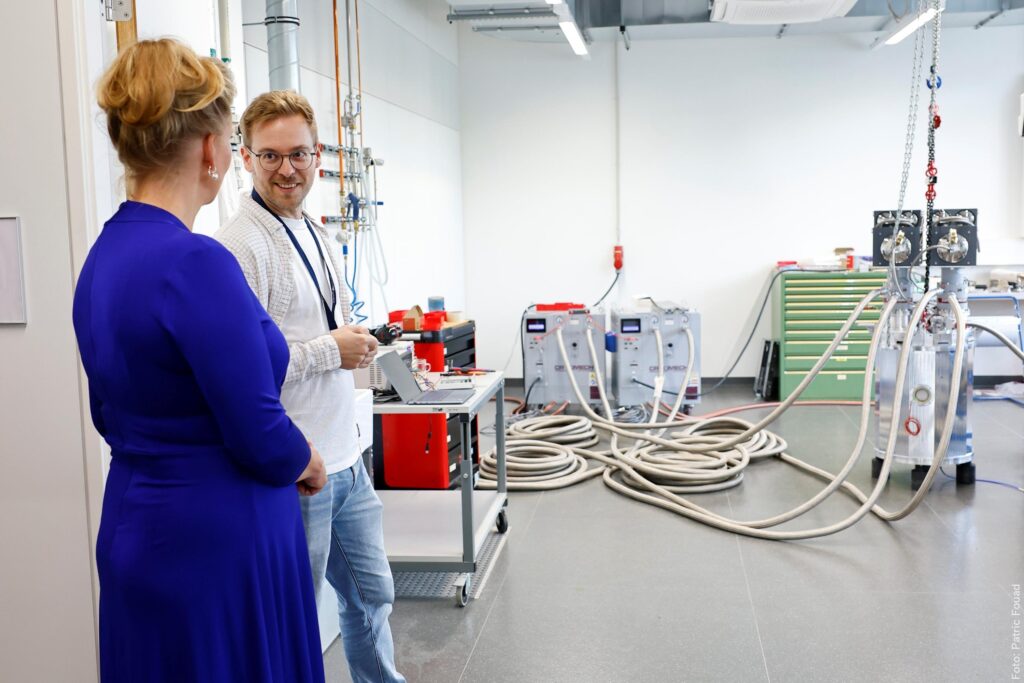
Furthermore the lab tour offered insights into the cooling of telescopes with cryostats and a lot more.
Exhibition Stations
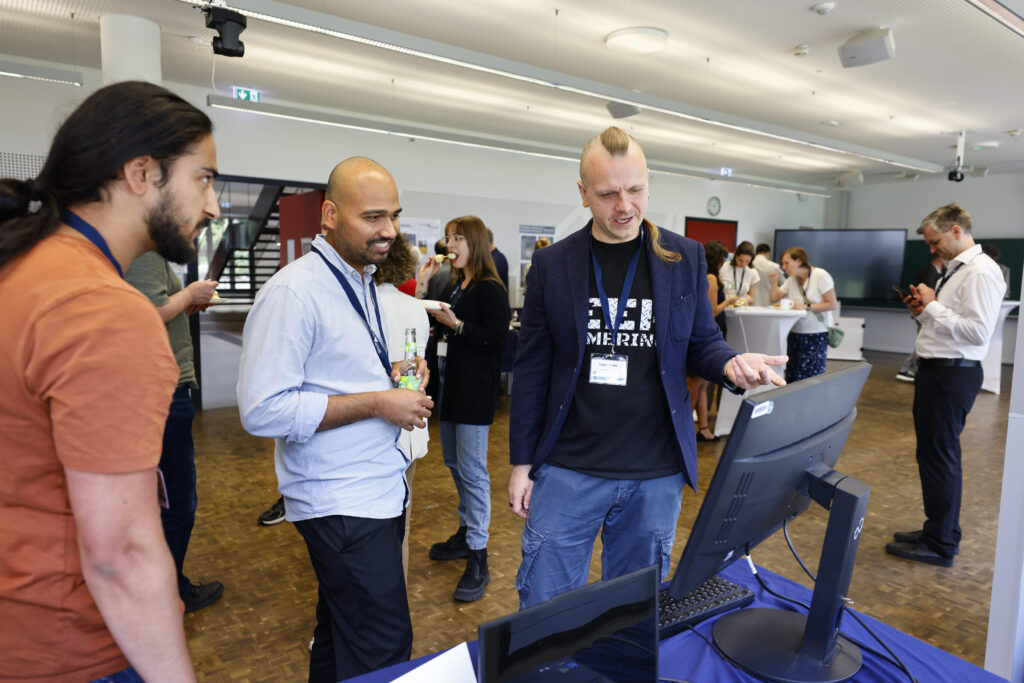
Inside the Extended Theory Building of the Physics Institutes, a series of stations offered visitors a closer look at different aspects of current astrophysical research and science communication. Topics ranged from teaching astrophysics through game-based learning to AI tools, robotics, virtual reality, and the modelling and development of telescope instrumentation.
The informal exchange featured contributions from Prof. Stefanie Walch-Gassner (University of Cologne), Dr. Andreas Lintermann (UoC), Prof. André Bresges (UoC), and representatives of the German Aerospace Center (DLR) and more scientists representing Dynaverse. The demonstrations highlighted a broad spectrum of research activities, including the CCAT/FYST project, astrophysics in the era of exascale computing and artificial intelligence, the use of large language models, and an interactive presentation with the robot “Navel.”
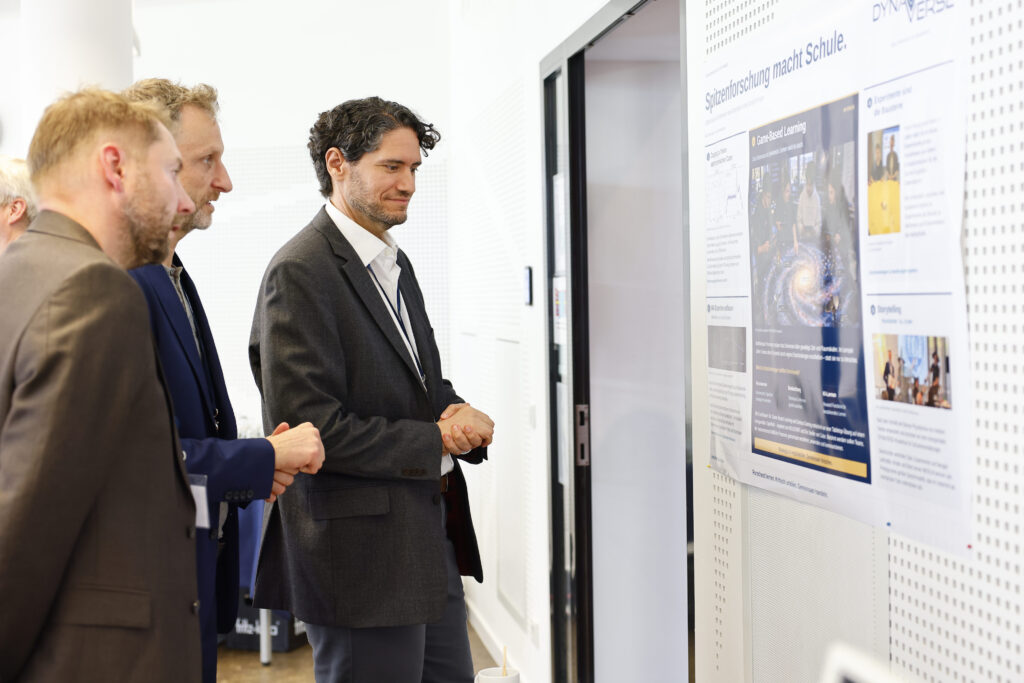
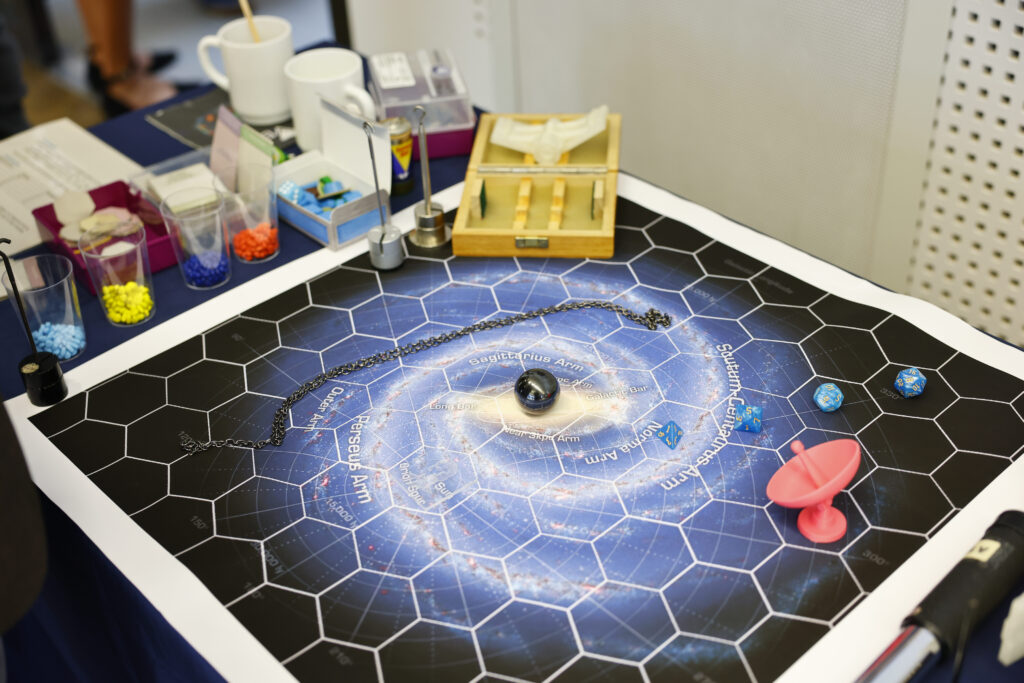
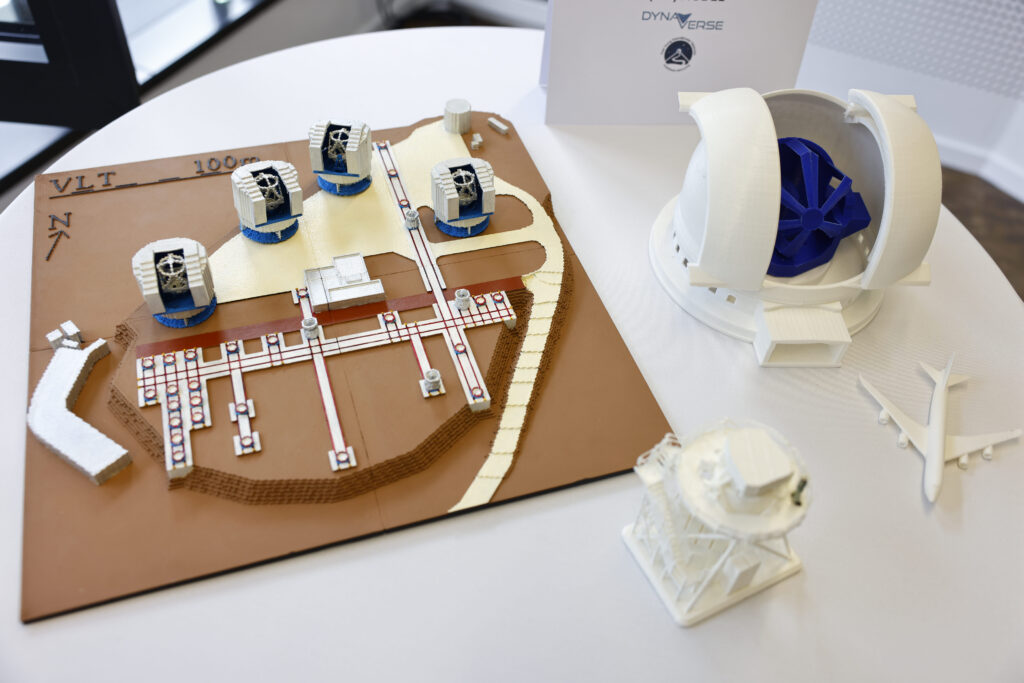
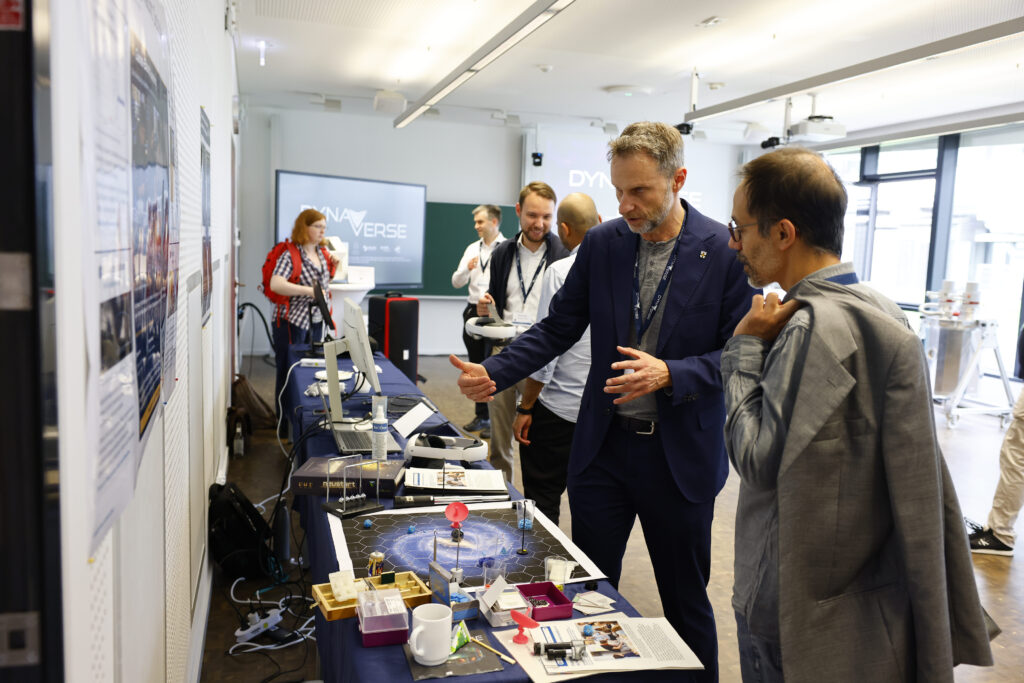
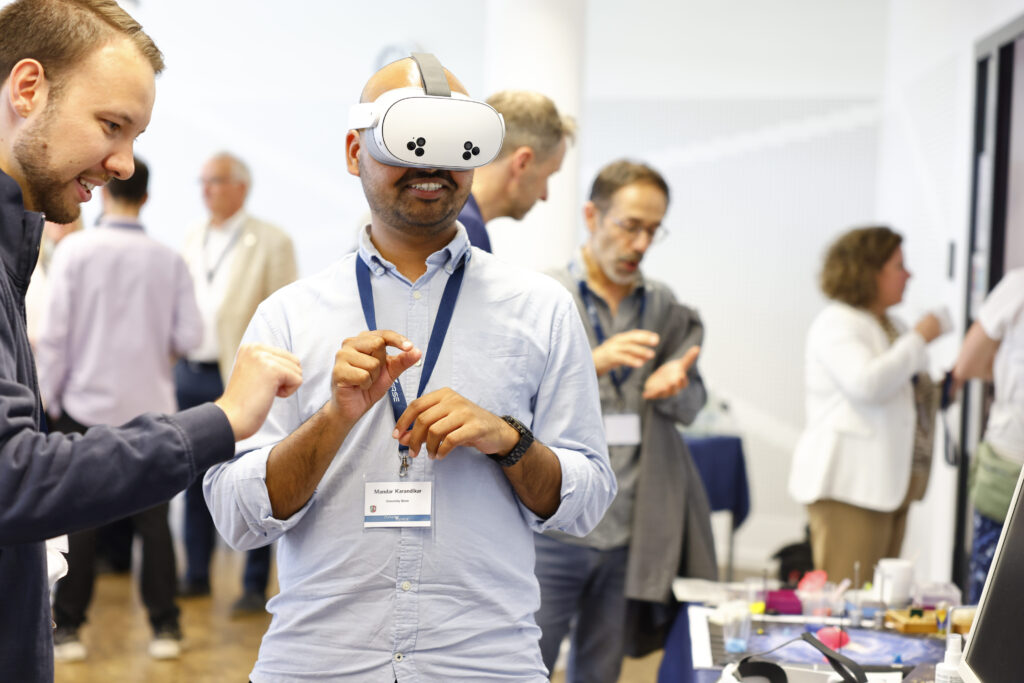
Highlighted by the Dynaverse Scientific Coordinator Dr. Karandikar (UB) are the VR and AI agent stations, which are used as learning and visualizing tools for the research and outreach of the cluster of excellence.
Closing
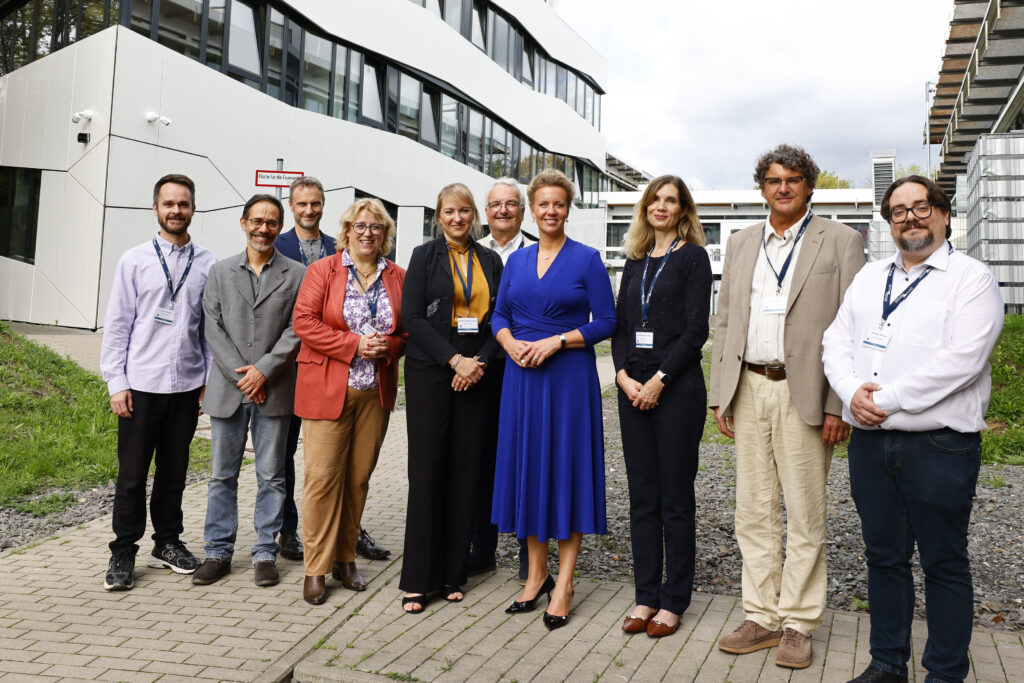
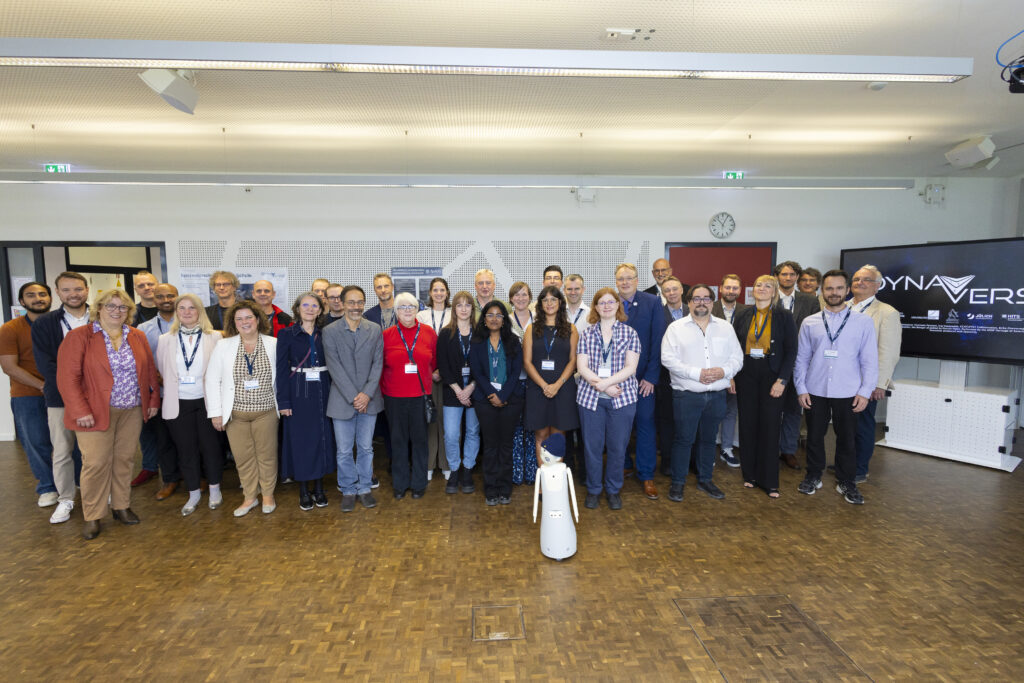
The visit concluded with the opportunity for group photos with the ministry and participants of the visit.
Astrophysics is no longer shaped by observations alone. Researchers develop sensitive instruments, build complex experimental systems, work with extremely large datasets, create numerical simulations, and increasingly explore how artificial intelligence can support scientific analysis. Within Dynaverse, these different approaches are brought together to investigate fundamental questions about our dynamic universe. We welcomed this opportunity to present the research of Dynaverse to Minister Brandes and show the significance of our work.