
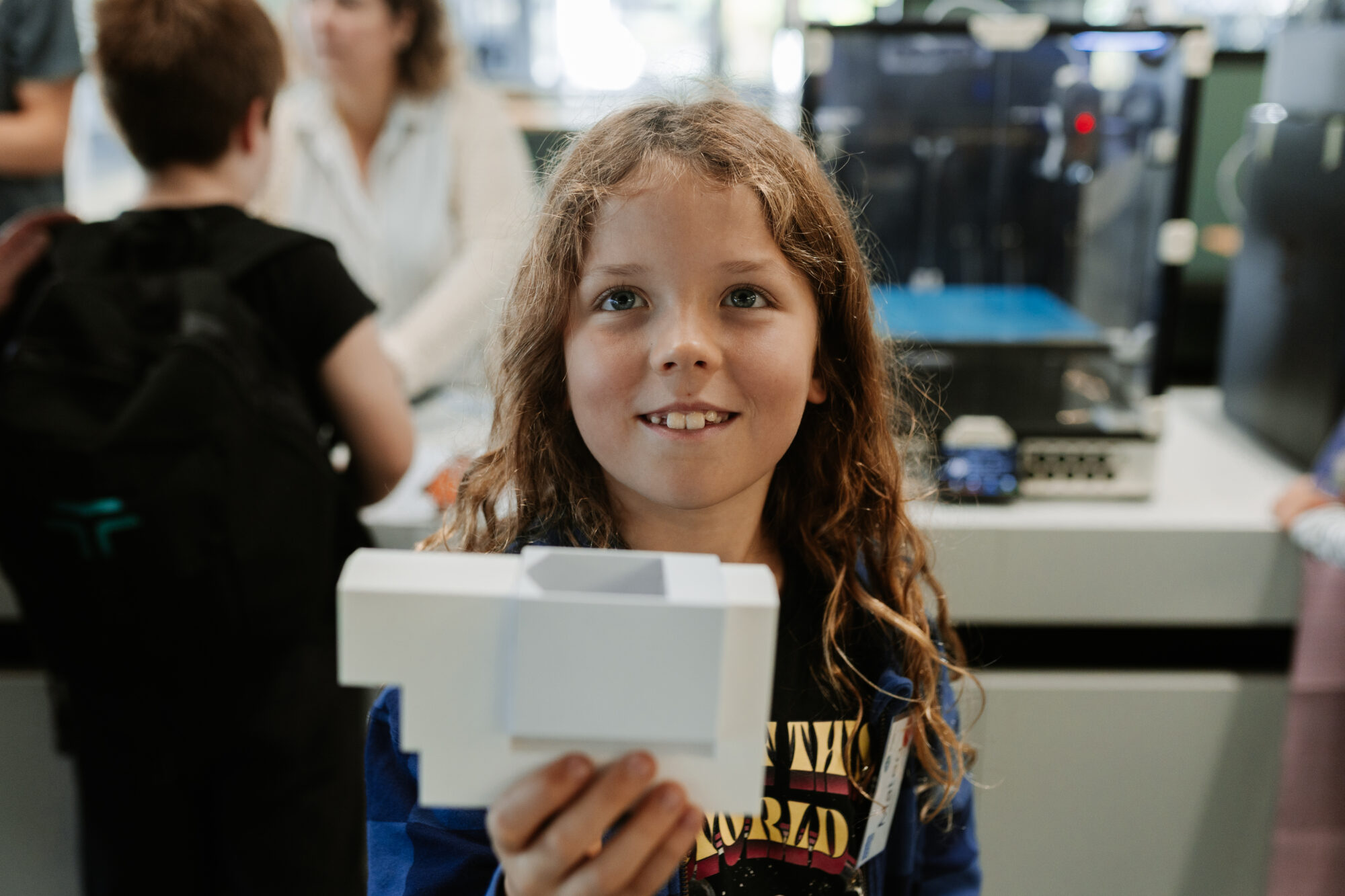
For the 2026 “Türen auf mit der Maus” day, we welcomed more than 30 young visitors to our physics building. The event began with an introductory talk by biophysicist Dr. Melih Yüksel and Dr. Marian Barsoum, who introduced the activities of the day and gave the children an insight into their work as physicists.
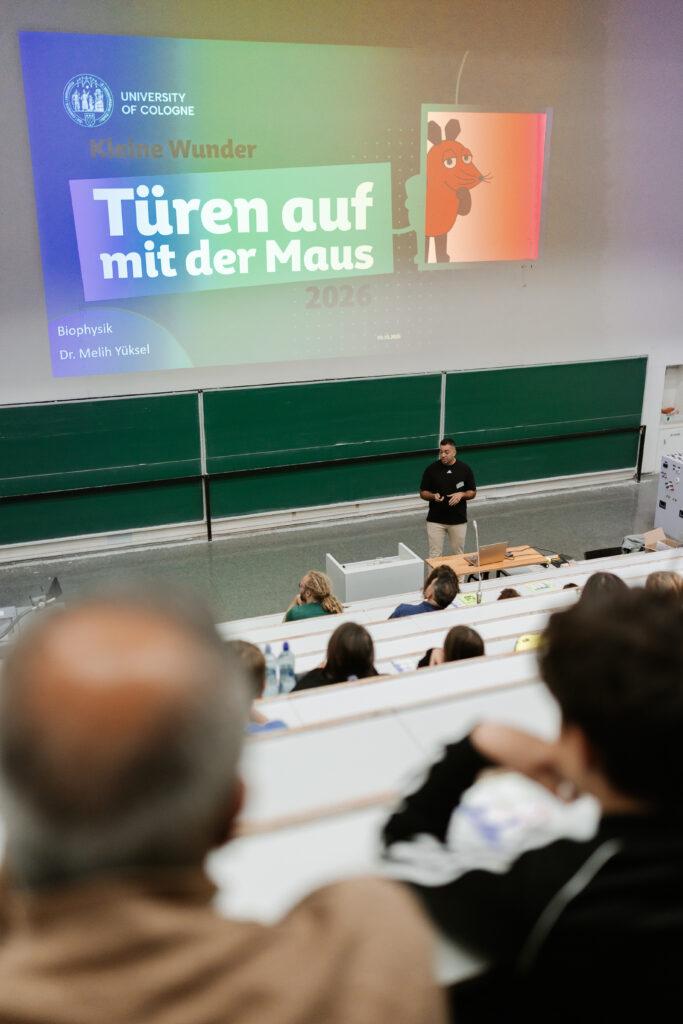
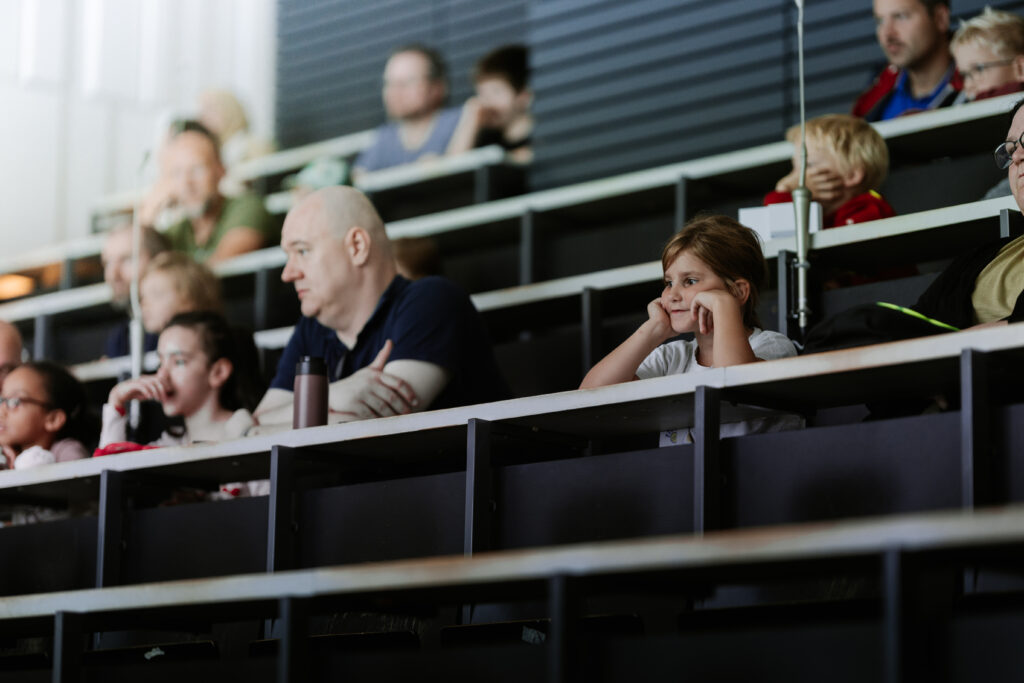
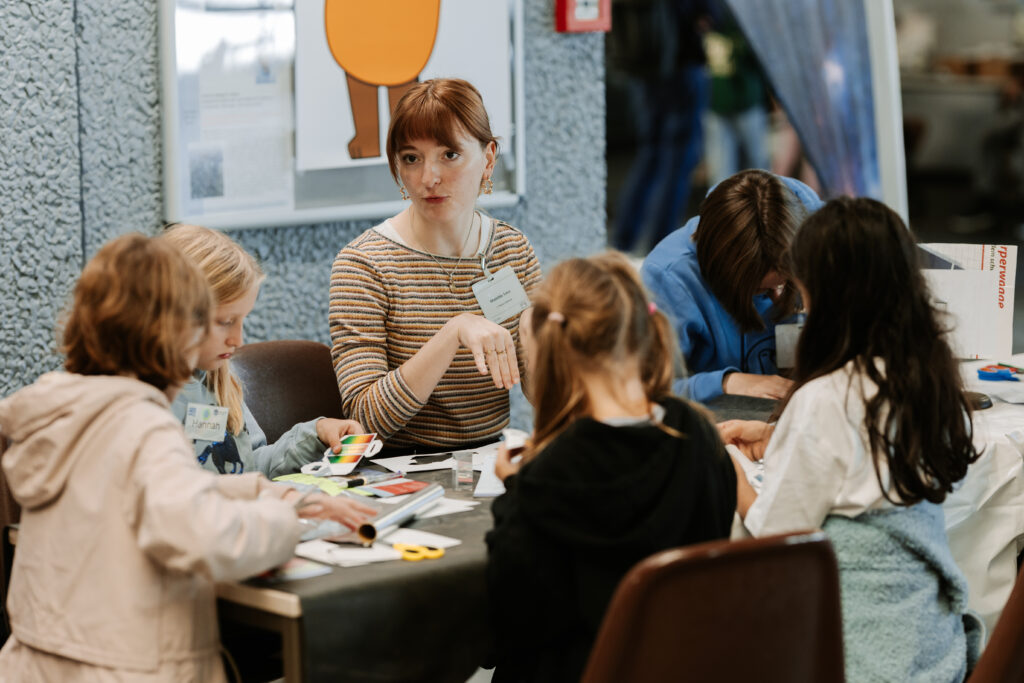
In correspondence with the two Clusters of Excellence Dynaverse and ML4Q as well as the SFB1601 Yüksel had prepared different stations which were designed to give the children fascinating insights into our work in physics. In groups of six every child received a stamp card to document its journey through the learning stations.
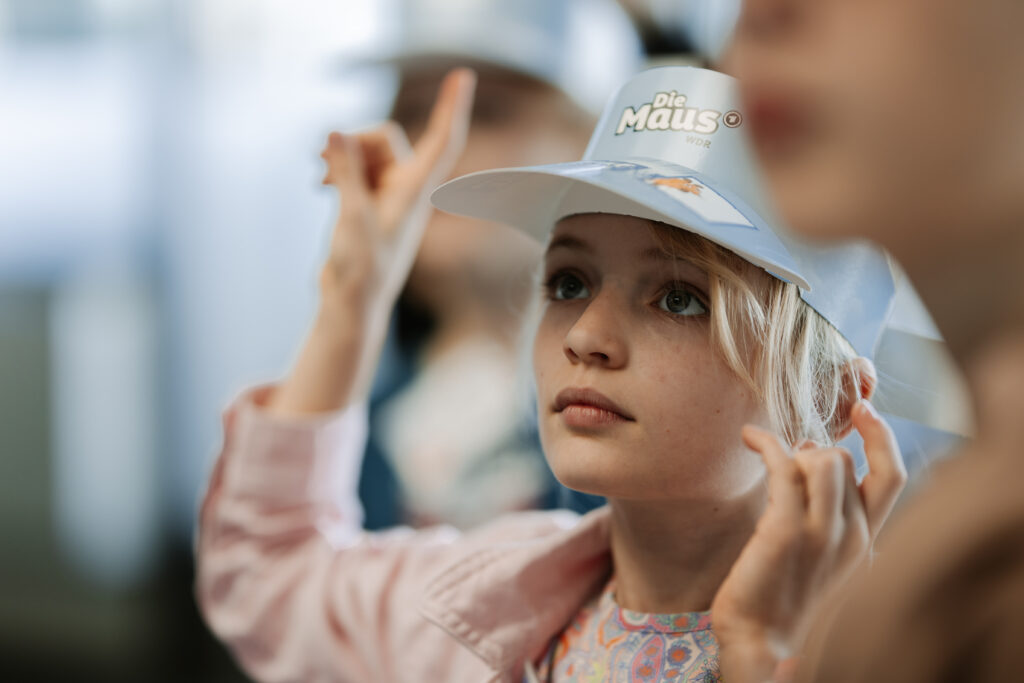
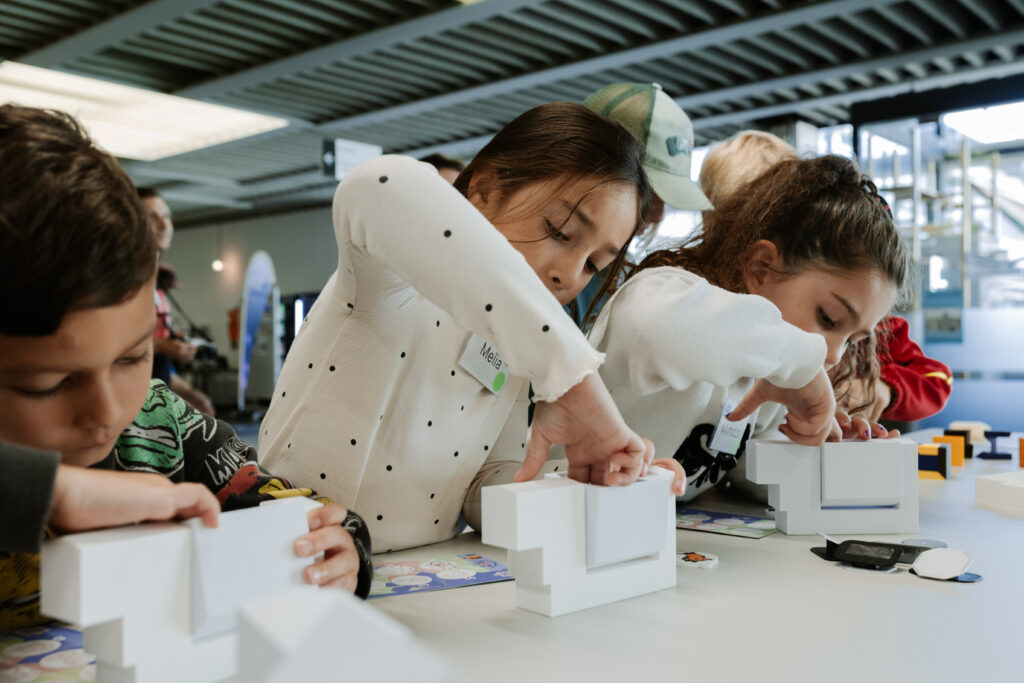
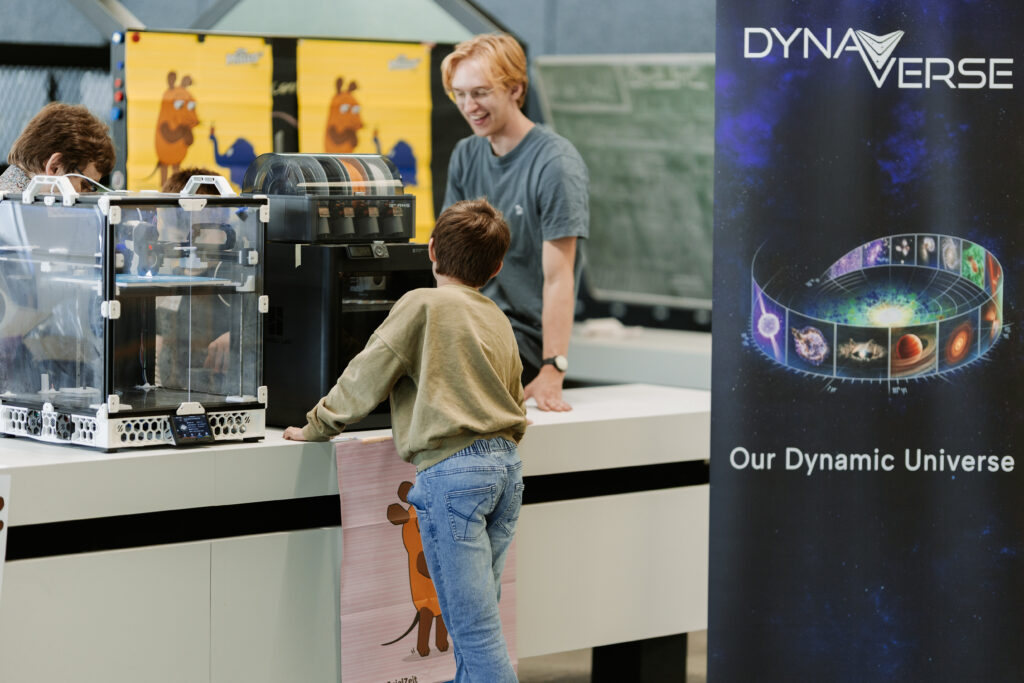
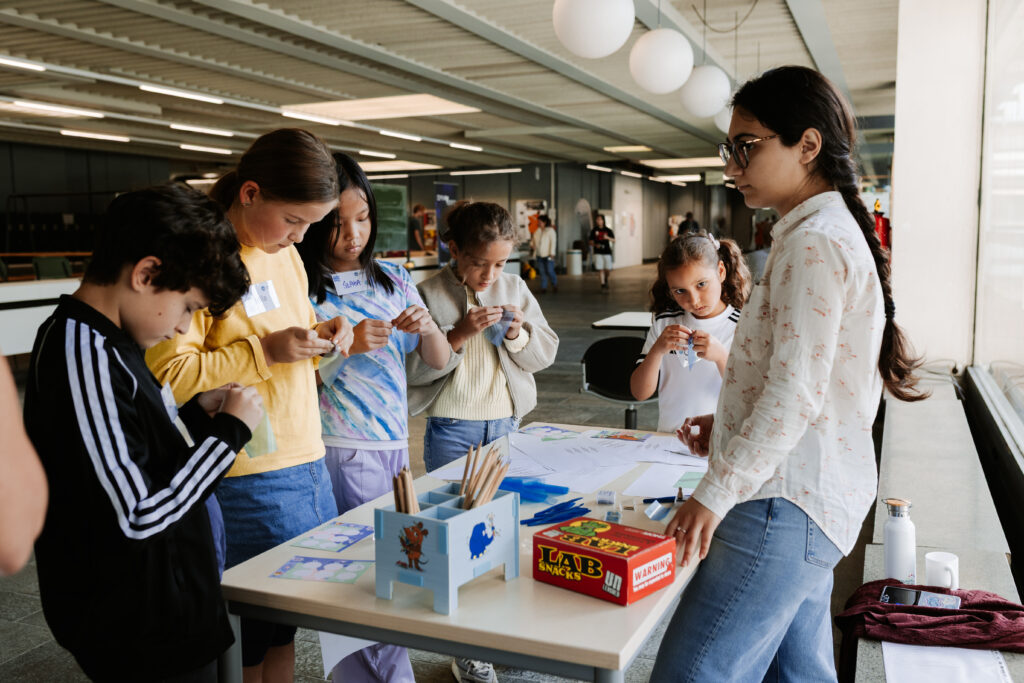
At one station Michael Weis, Ph.D. student in the Research Group of Stefanie Walch-Gassner, demonstrated how 3D-printers can produce models of telescopes. The children were able to assemble their very own model of either CCAT or the James Webb telescope. While putting the telescopes together, they learned why mirrors are so important in astronomical telescopes and how their arrangement helps scientists collect and study light from distant objects in the Universe. A selection of 3D-printed games and puzzles also gave the children the opportunity to explore what can be created with a 3D printer and how this technology can be used to produce complex shapes and scientific models.
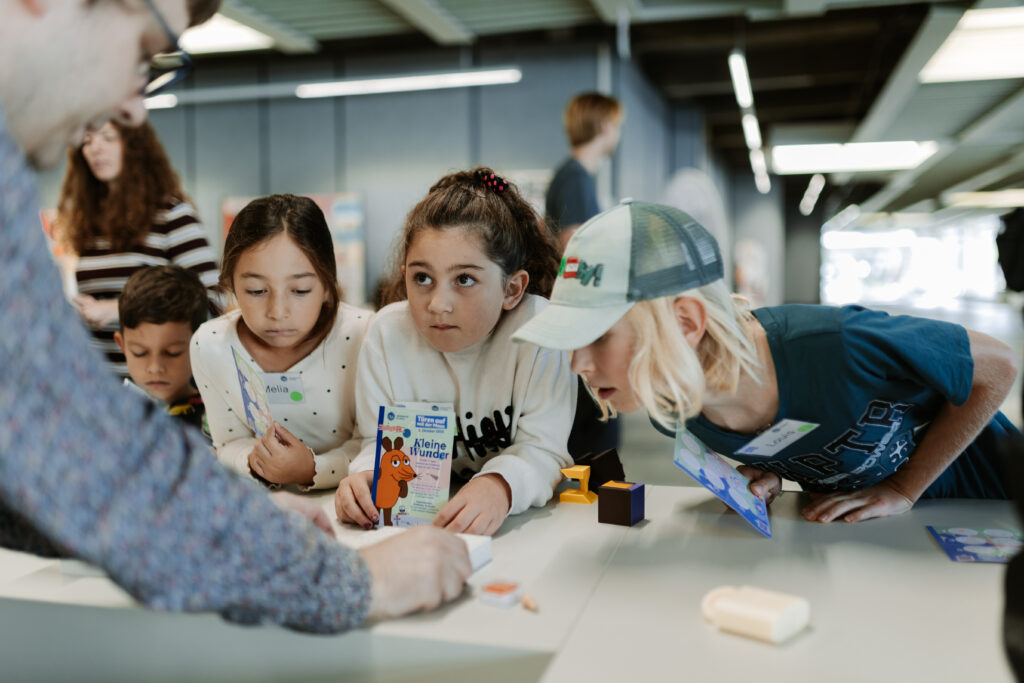
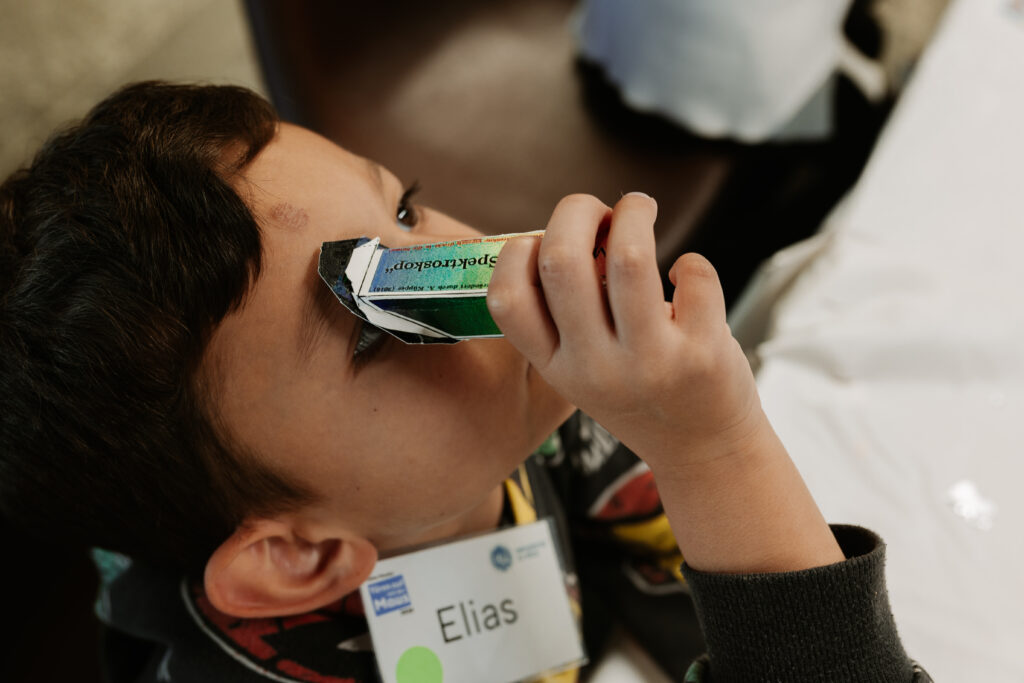
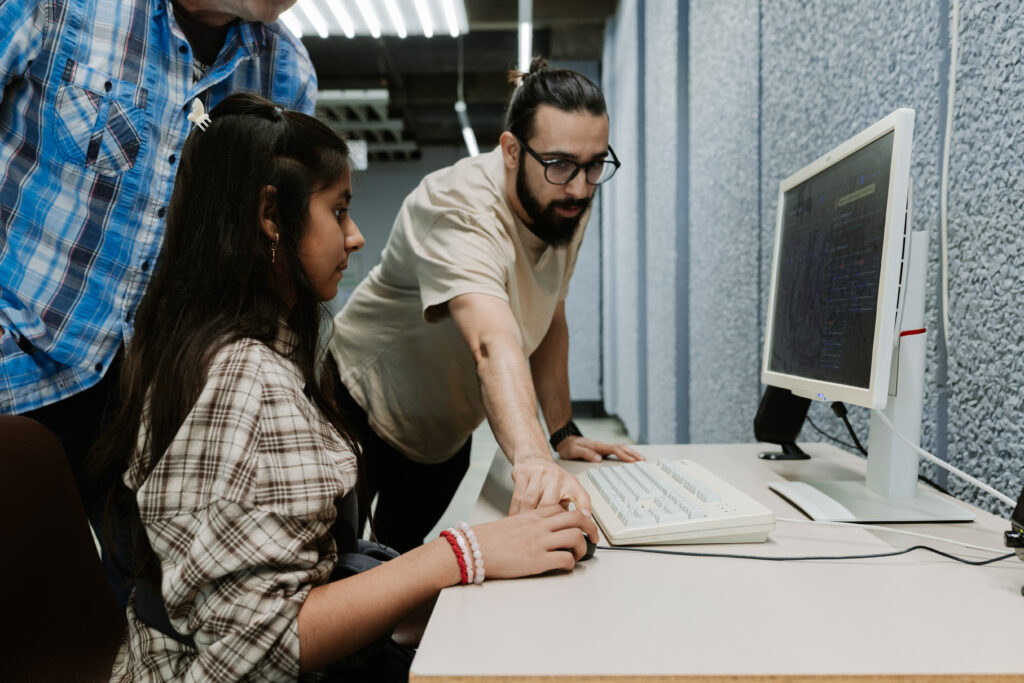
In a second station the children learned about the physical wonder of spectroscopy. Using paper and simple household materials, they built their own single-slit spectroscopes and could see how light can be separated into different colors. They also learned how astrophysicists use spectra to find out what distant astronomical objects are made of. On a computer, the children tried to match spectral lines to different elements. When they identified the correct element, the result was translated into sound and played through speakers. In this way, they experienced how the characteristic “fingerprints” of atoms can be used to identify different materials.
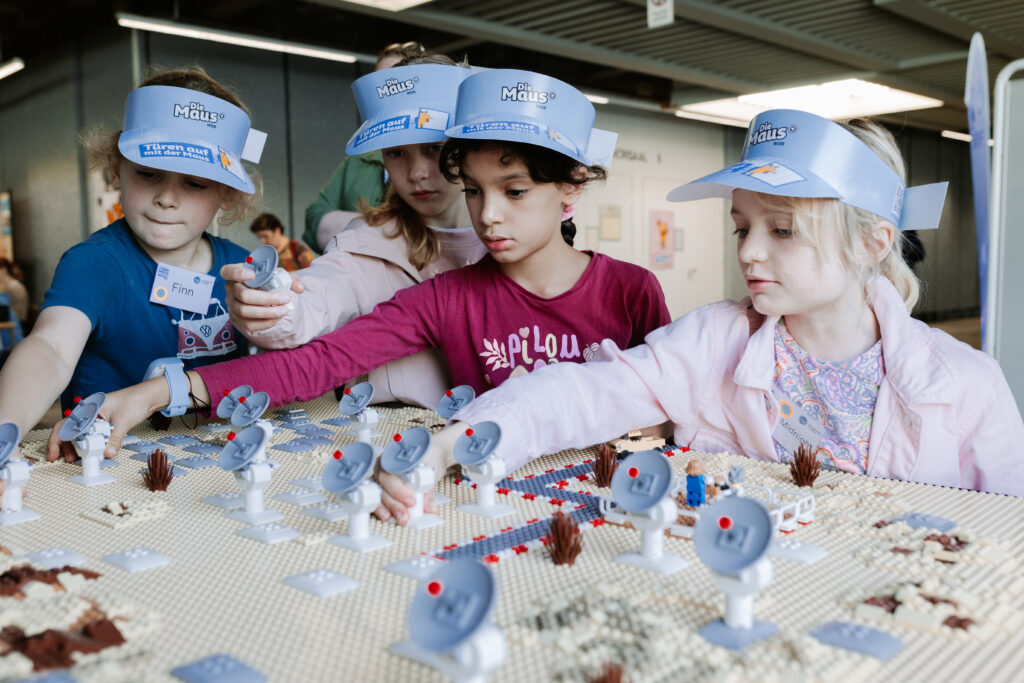
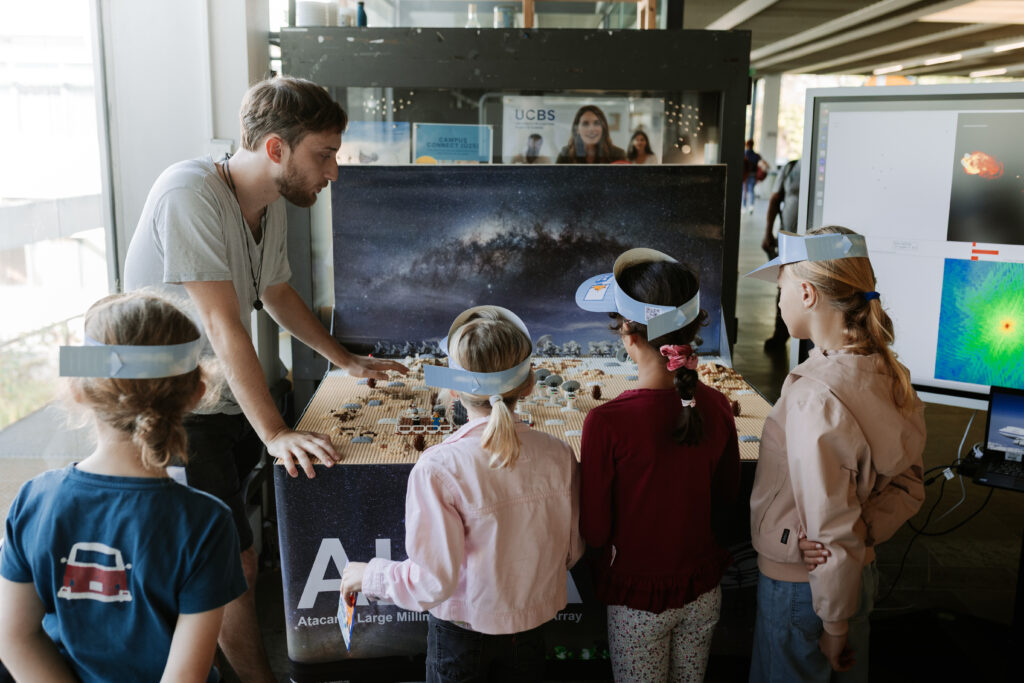
The LEGO ALMA station brought one of the world’s major astronomical observatories into the physics building in miniature form. Using a LEGO model of the Atacama Large Millimeter/submillimeter Array (ALMA), the children learned how many individual antennas can work together as one much larger telescope.
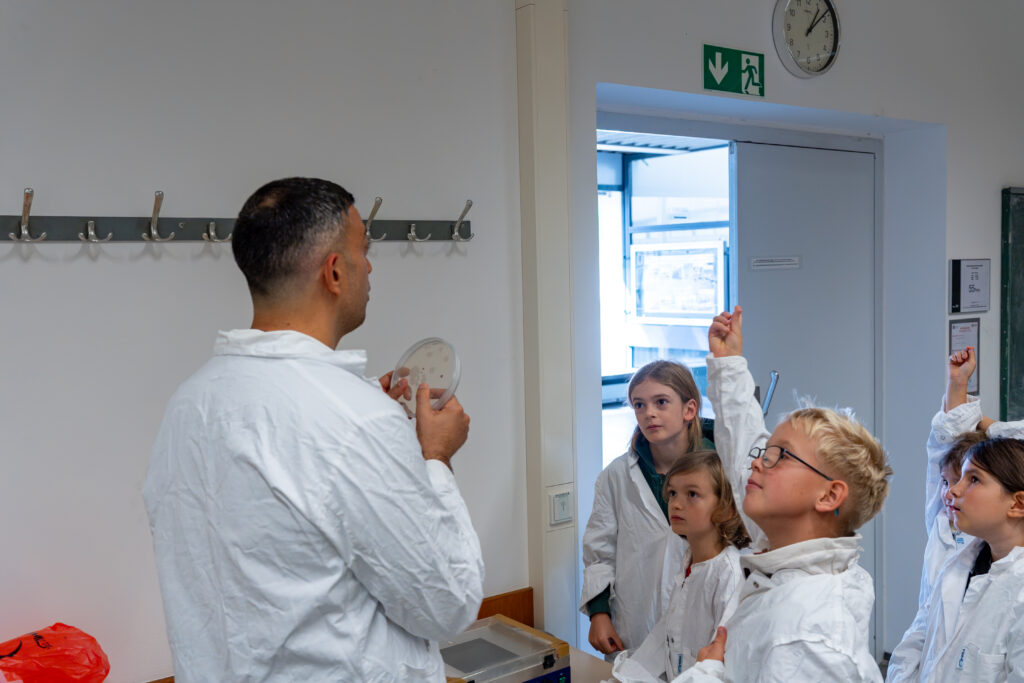
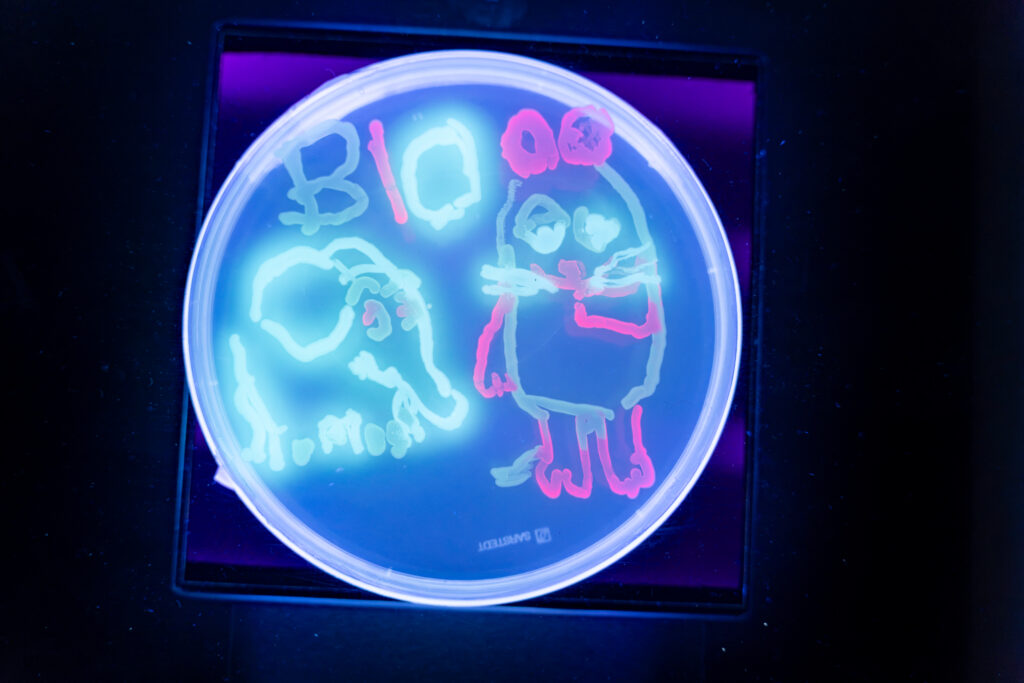
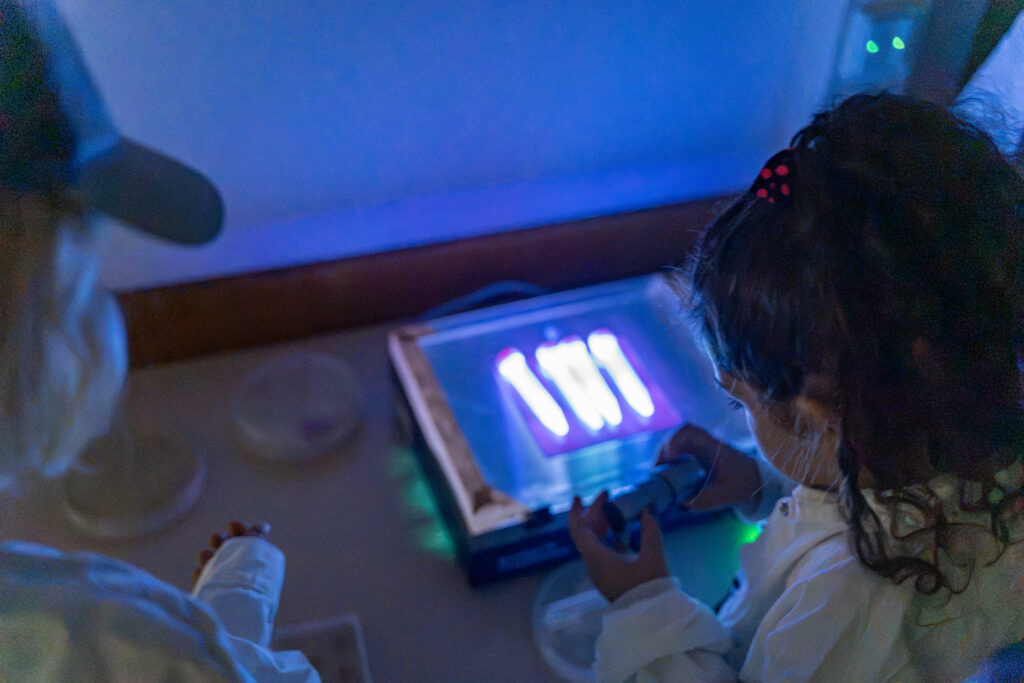
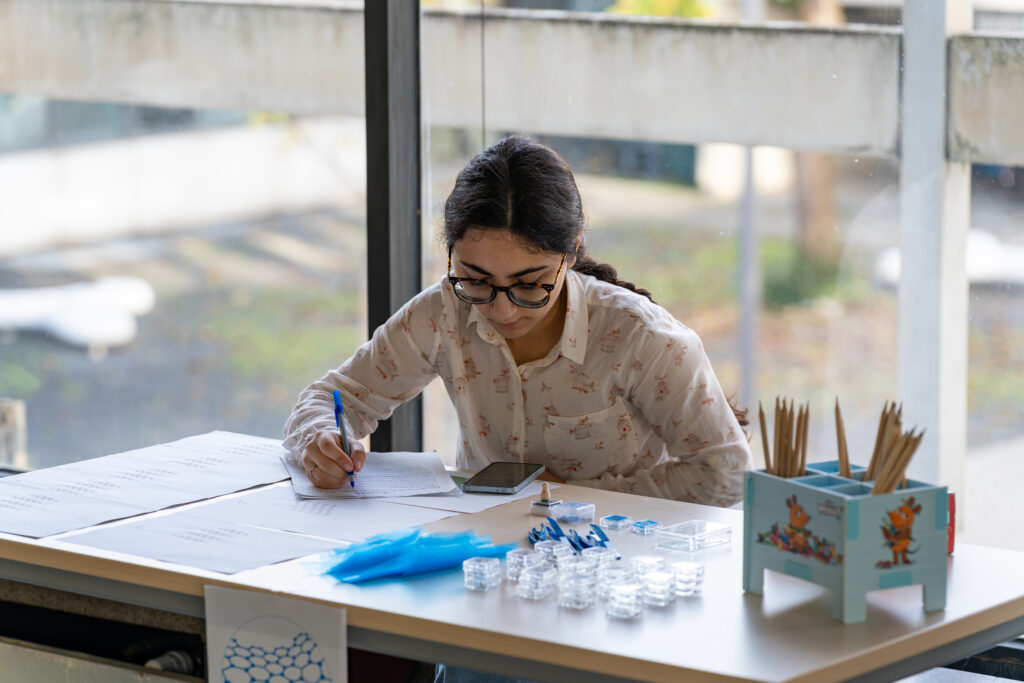
Their next station was about the work of biophysicists. Here, they could put on real laboratory coats and get a first impression of everyday work in a biological physics laboratory. The children could explore prepared Petri dishes that contained bacterial cultures. The station showed how physicists and biologists can work together to investigate living systems and gave the children an introduction to laboratory techniques, microorganisms, and the careful handling of scientific equipment.
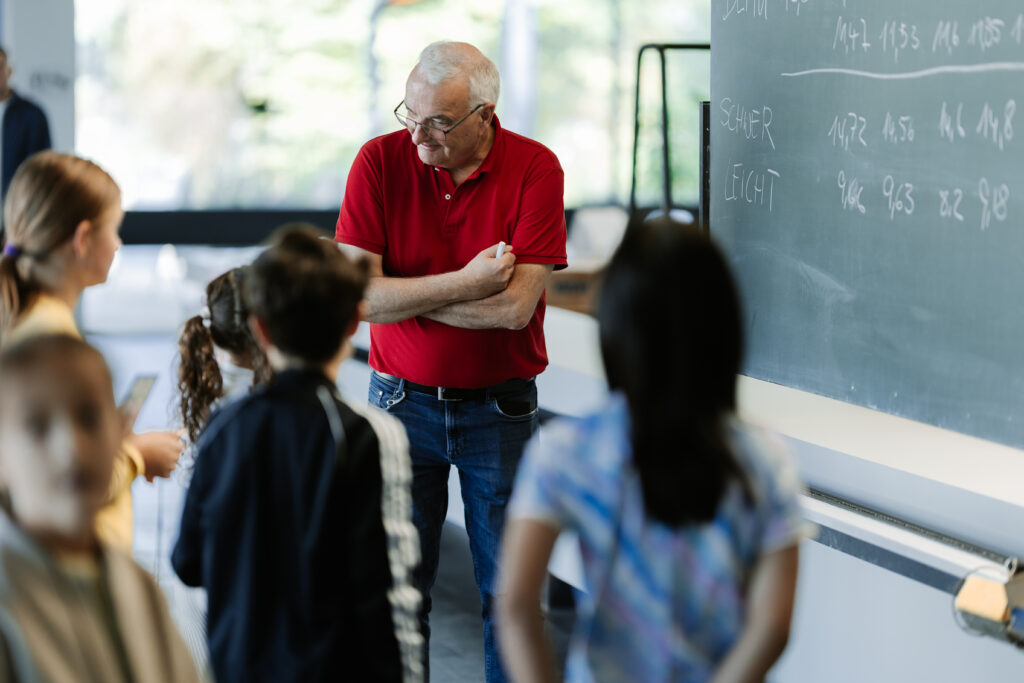
For another hands-on experiment, Prof. Stefan Schlemmer prepared a pendulum. The children measured the time needed for one complete oscillation while experimenting with different masses. By comparing their measurements, they could investigate which factors influence the period of a pendulum and discover that changing the mass does not significantly change the time of one oscillation. The experiment offered a simple but effective introduction to measuring physical quantities in experimental physics.
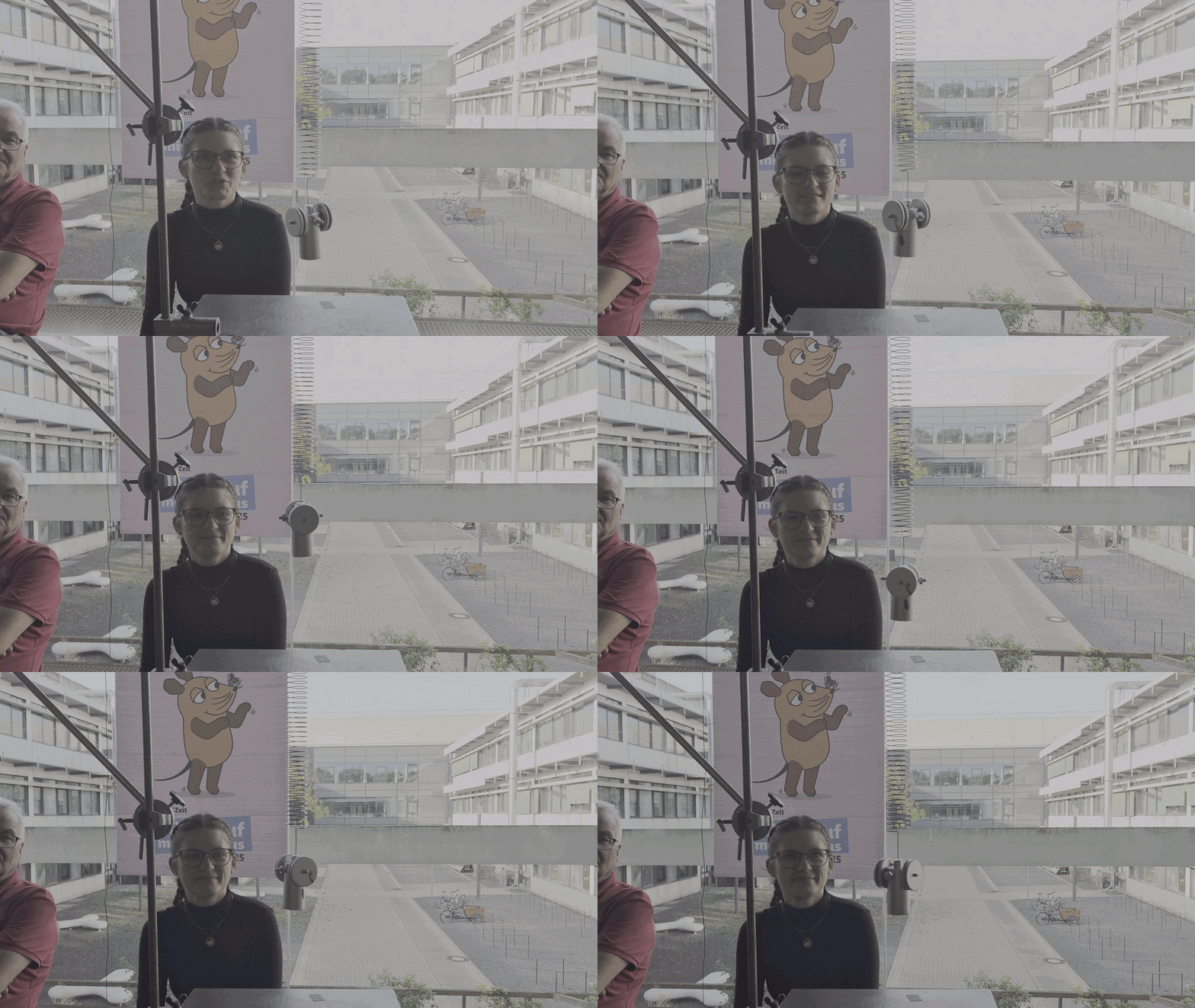
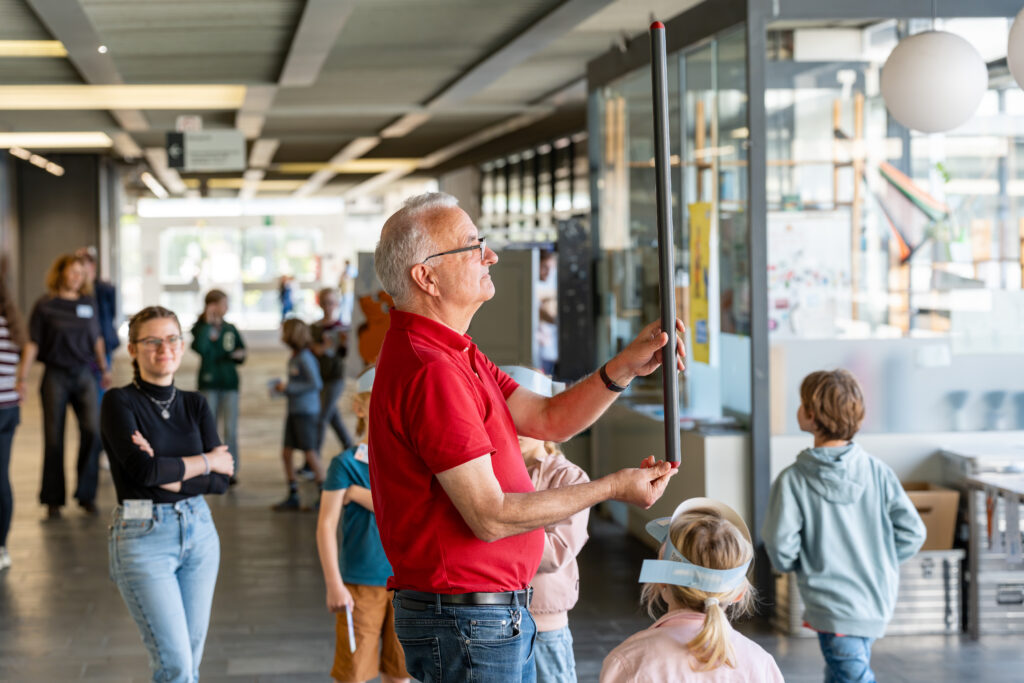
Having learned a lot already the children then came to a LabAstro station, the children explored the physics of oscillations and frequencies. They learned that frequencies and vibrations are important concepts in physics and astronomy, where they can help scientists understand how different physical systems behave.
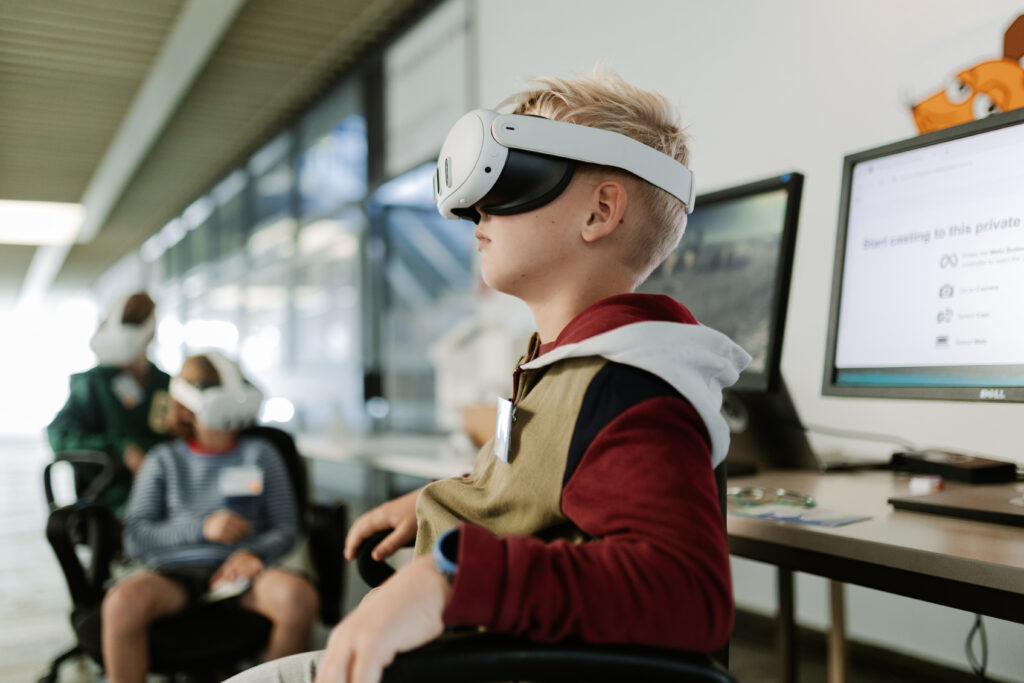
At the final station, the children could leave reality behind. With a VR headset, they explored our Solar System and experienced the construction of CCAT in an immersive virtual environment. The station gave them a sense of the enormous scales involved in astronomy and showed how virtual-reality technology can help scientists and the public visualize places, objects, and scientific projects that would otherwise be difficult to experience firsthand.
Photo Credit: Oskar Gebel
