
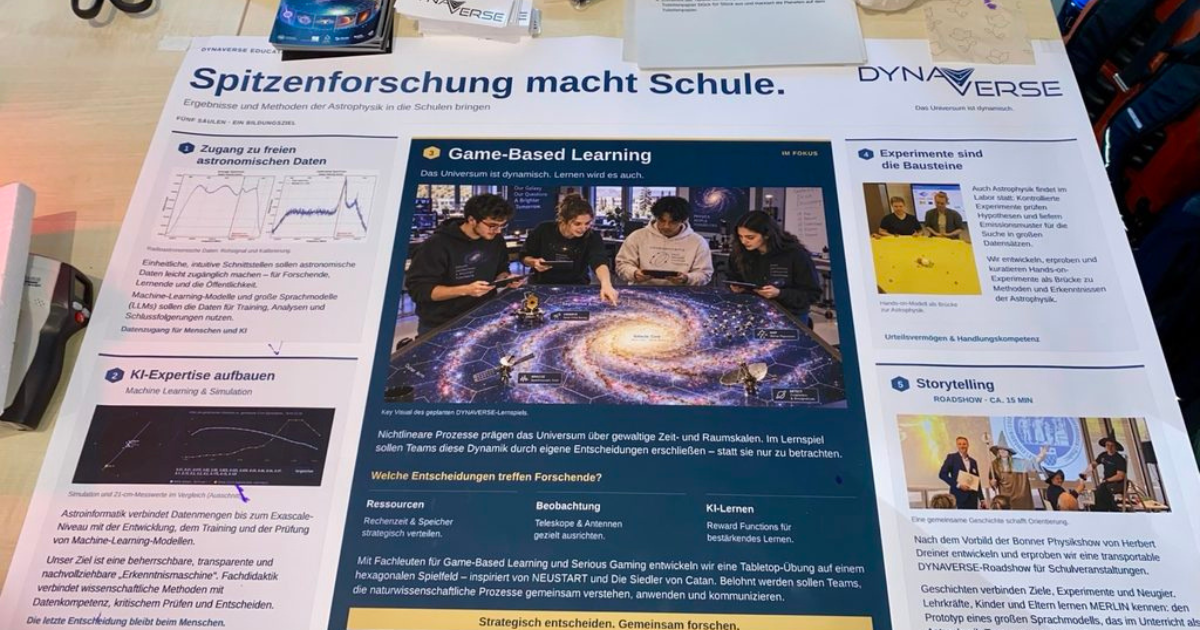
The first discoveries of potentially habitable planets outside our solar system were spectacular. Now, with the game developed by Prof. Dr. André Bresges and his team, everyone can become a planet hunter. The goal is to find a habitable planet, and the game lets students develop their curiosity through an interactive and fun learning experience. Students take on the role of an astronomer and first have to decide where to start searching with a conventional telescope: in the dark patches of the sky, or in the Milky Way, where there is a lot to see?
Prof. Dr. Bresges and his team from the Physics Didactics group at the University of Cologne work closely with Dynaverse, in which he is also involved as a PI. Last Saturday, on October 31, they took part in the MINT Day 2026 at the Cologne Central Library. The event invited visitors to a variety of experiments and information booths on topics including nature, electronics, mathematics, computer science, sustainability and, of course, astrophysics.
Game-based learning applied to astrophysics
Back to the planet hunt: students were only allowed to use the telescope once they could explain to the teacher how it works, covering both its mechanics and its optics. To investigate further, they then needed a radio telescope, and again had to explain how it works to unlock it. Along the way, students built up the astrophysical knowledge needed to find a habitable planet while interacting closely with the teacher. The game also brings astrophysics into the curriculum, which is a good entry point to the natural sciences and physics, since most people are fascinated by the night sky.
Another playful activity was the “Toilet Paper Activity”, which visualizes the size of the solar system. One sheet represents the distance between the Sun and Mercury. On this scale, the distance between the Sun and Neptune is 76.3 sheets, stretching almost across the entire floor of the library.
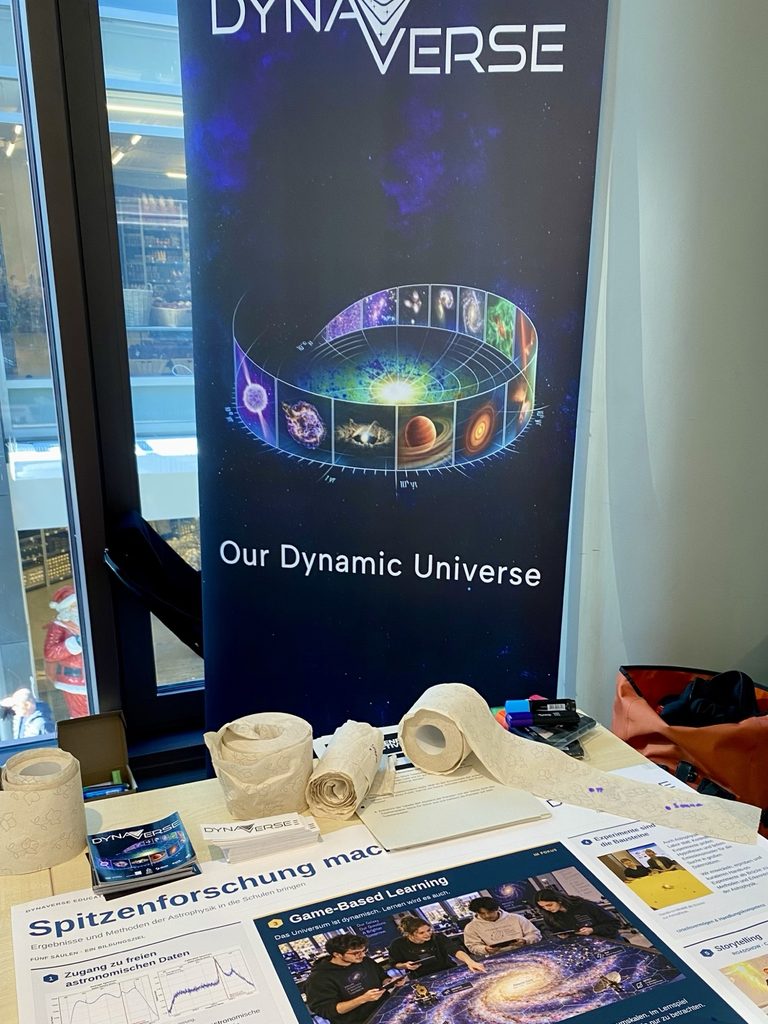
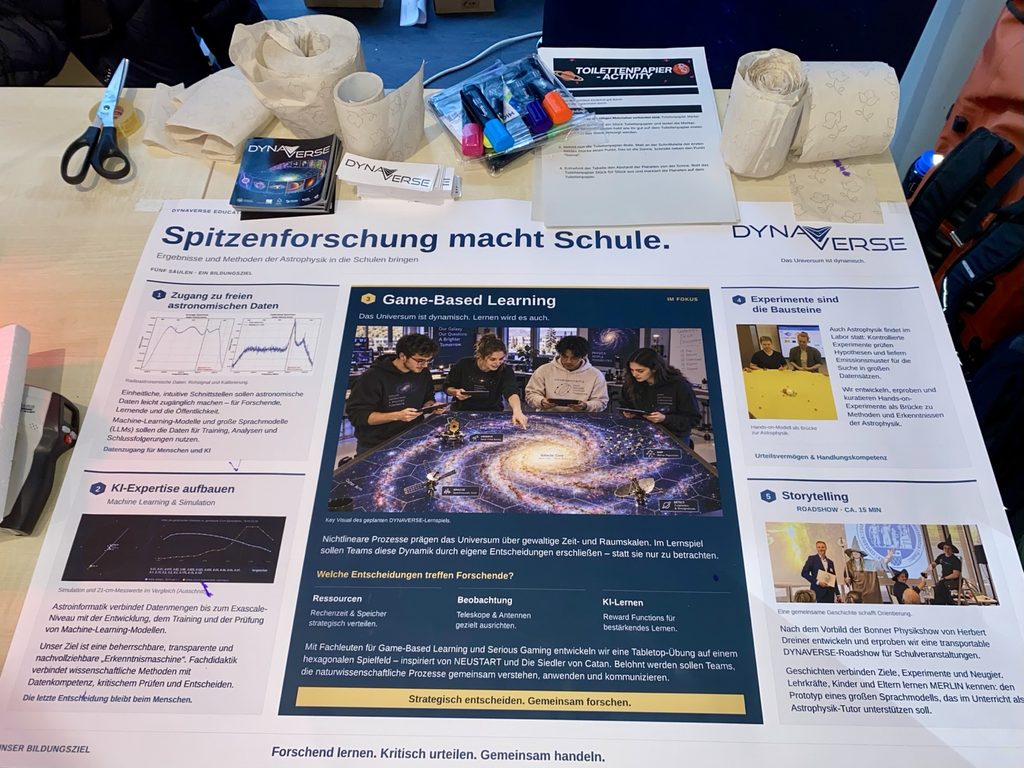
Right: A part of the information booth of the physics didactics department. Left: A poster about the astrophysics game explained above.
The MINT Days 2026
The MINT Days are a nationwide German program that takes place every November. The program is put together by the individual event organizers. Each day has a different topic and includes interactive exhibitions and opportunities for networking. A particular emphasis is placed on innovative real-world examples and on workshops that help the community develop further skills. Previous editions focused on digital communities, gender, didactics, quality development, cooperation and funding. This year’s focus was on innovation in MINT education, gender and participation.
The Physics Didactics group also offered other hands-on activities: building an electric circuit with a small lamp, a battery and a wire; experiencing electrostatic attraction with a balloon; and building an electroscope from cans. To raise awareness of sustainability, the team irradiated three different materials with an infrared lamp to demonstrate how plants cool their surroundings.
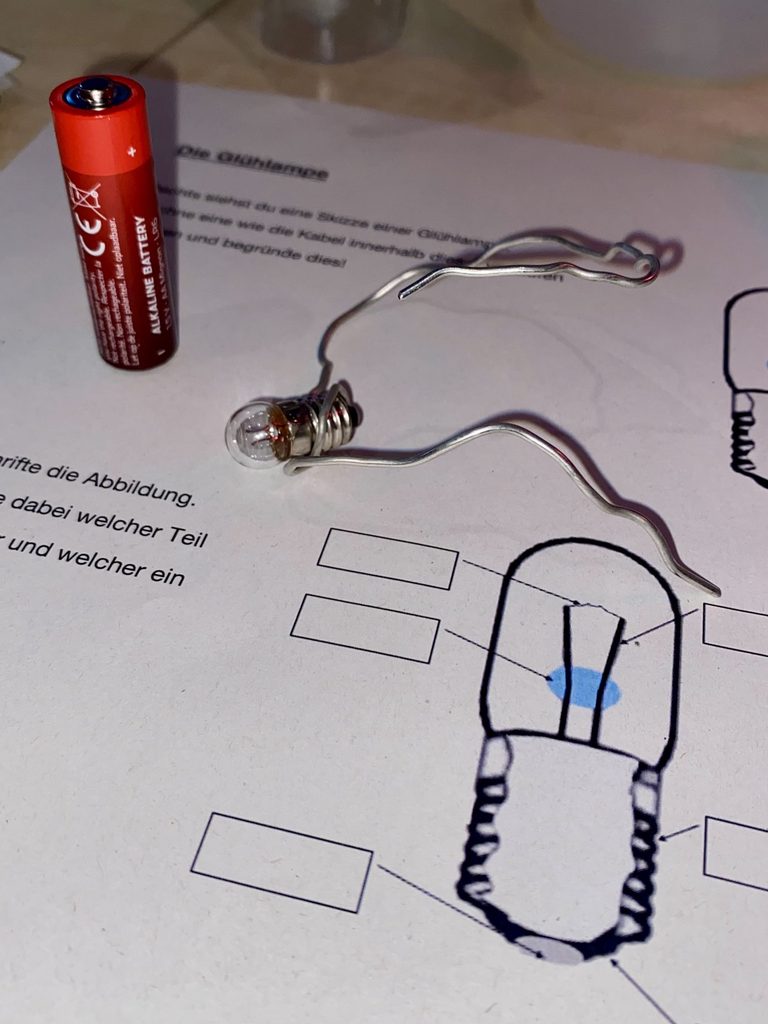
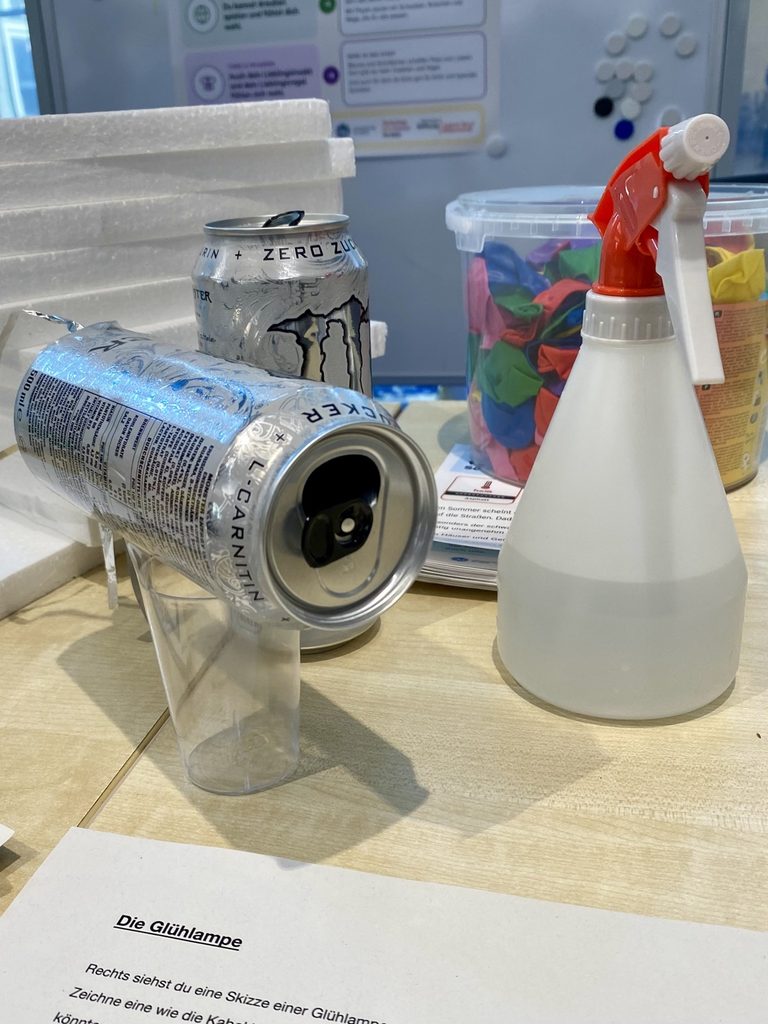
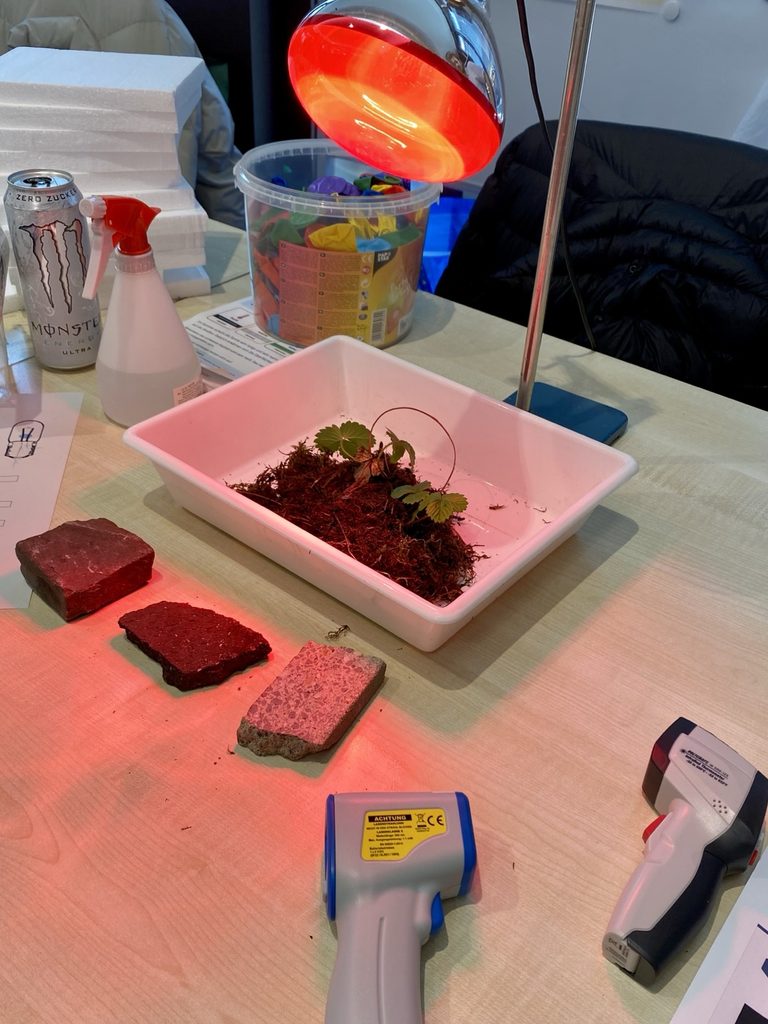
Left: Build your own electric circuit. Middle: Build an electroscope with a can. Right: Feel and measure the different heat capacities of materials.
Photo Credits: Alice Coors, Dynaverse
