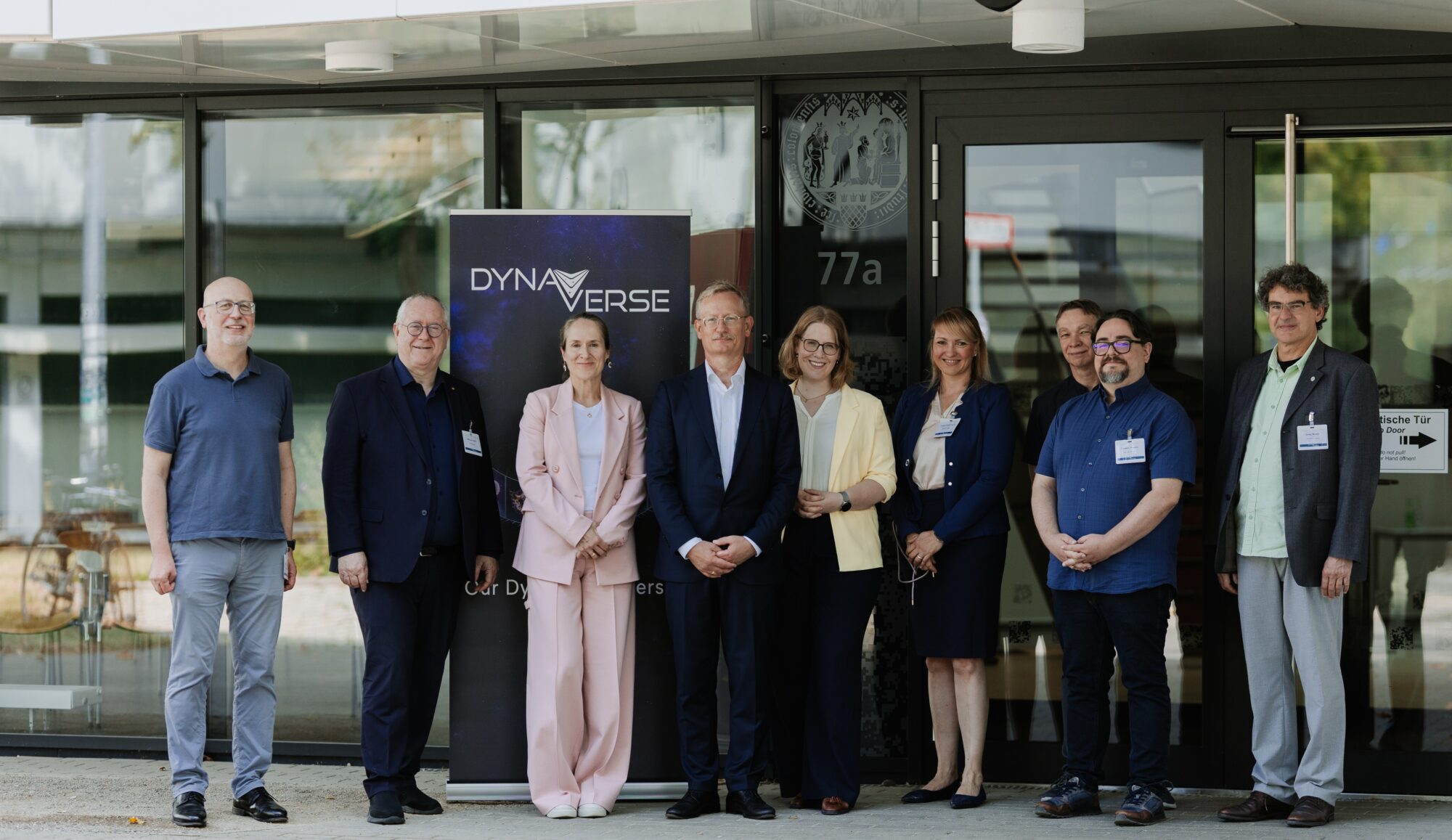
On July 27, we had the pleasure to welcome Dr. Hess and Dr. Backen, representatives of the BMFTR, at the University of Cologne. Dr. Hess, head of the Unit R21 “Universe and Astrophysics” , and Dr. Backen, officer of the same unit, visited our university to get a better idea of the research being conducted by the scientists at Dynaverse.
The event began with official welcoming remarks from representatives of the University of Cologne (UoC) and the University of Bonn (UB): Prof. Beatrix Busse, Vice Rector for Teaching and Academic Affairs (UoC); Prof. Hoch, Rector (UB); and Prof. Georg Bareth, Dean of the Faculty of Mathematics and Natural Sciences (UoC).
Prof. Stefanie Walch-Gassner (spokesperson for Dynaverse) and Prof. Cristiano Porciani (co-spokesperson for Dynaverse) provided an overview of Dynaverse’s key research areas, its scientific highlights, and current projects. They highlighted the research infrastructure – including partner institutions in Germany and around the world, such as the Jülich Supercomputing Center and the CCAT Consortium – which are crucial to the cluster’s success, as well as the support provided to early-career researchers to nurture the next generation of talent.
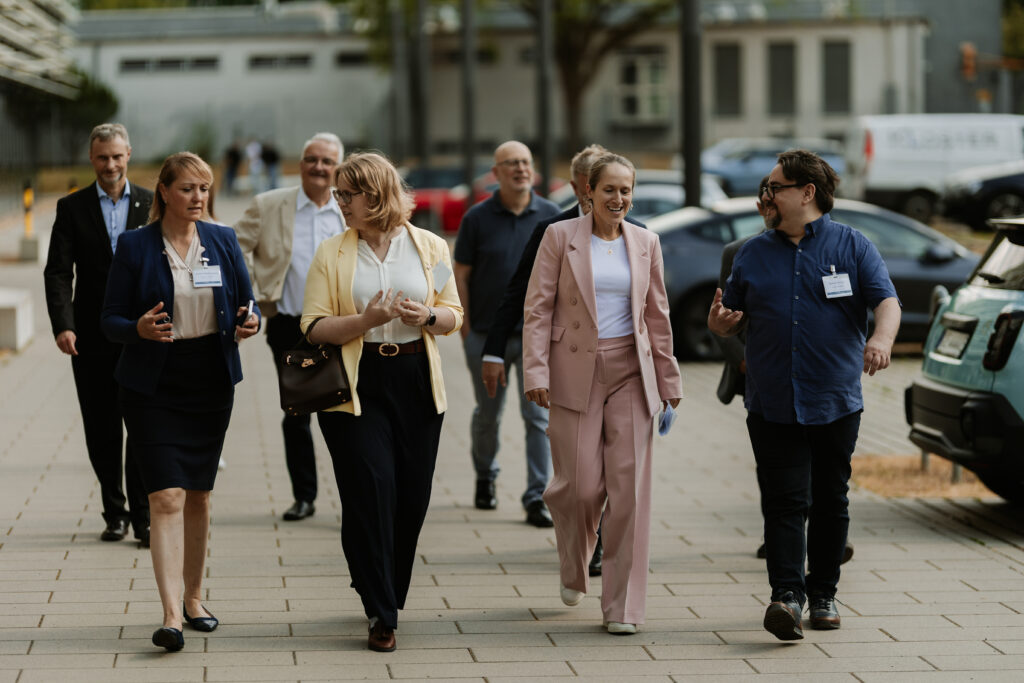
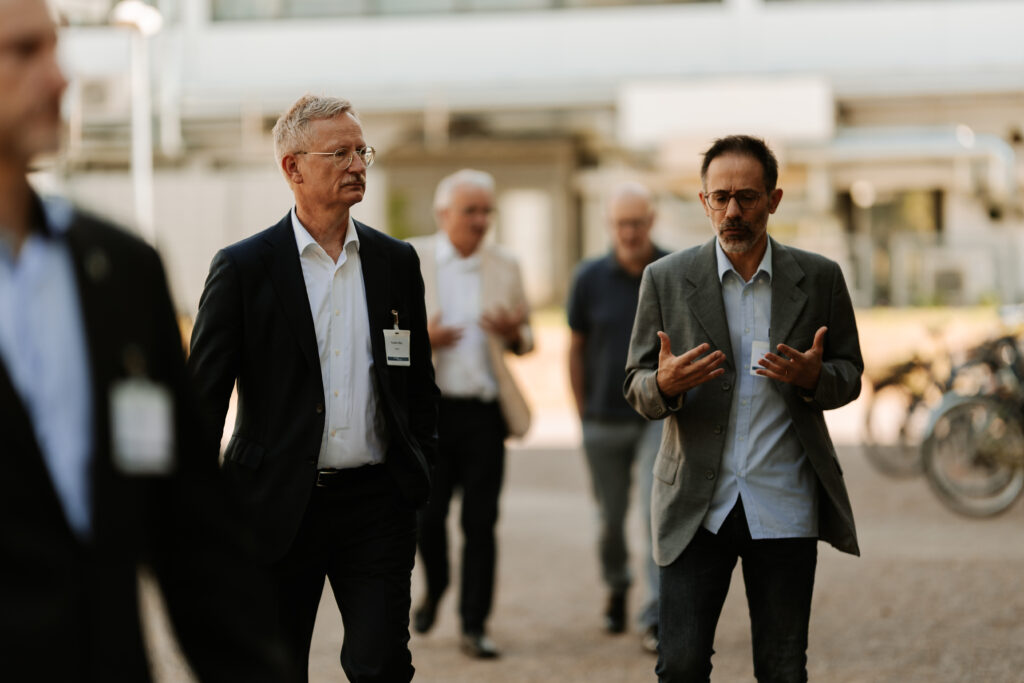
Left picture (fltr.): Prof. Walch-Gassner (UoC), Dr. Backen (BMFTR), Prof. Busse (UoC), Prof. Riechers (UoC). Right picture (fltr.): Dr. Hess (BMFTR) together with Prof. Labadie (UoC).
Lab Tour
Following the official welcoming remarks, attendees were given a tour of the new astrophysics laboratory building, which also serves as the central infrastructure for the SFB 1601 “Habitats of Massive Stars Through Cosmic Time” as well as for the Dynaverse and ML4Q Clusters of Excellence. There, equipment has been developed for various telescopes, including SOFIA, Herschel, and now also the James Webb Space Telescope. Scientists in Cologne are also developing instruments for ESO’s ELT, such as METIS, a mid-infrared spectrograph, and an imaging instrument. Astrophysics at the University of Cologne occupies a unique position, as the department covers the development of sensors and instruments, data analysis and evaluation, as well as laboratory astrophysics and theory, thereby encompassing the entire value chain of astronomy and astrophysics. For example, the Cologne Database for Molecular Spectroscopy (CDMS), which was developed in-house, is used for all radio observation studies, underscoring the importance of astrophysical research in Cologne.
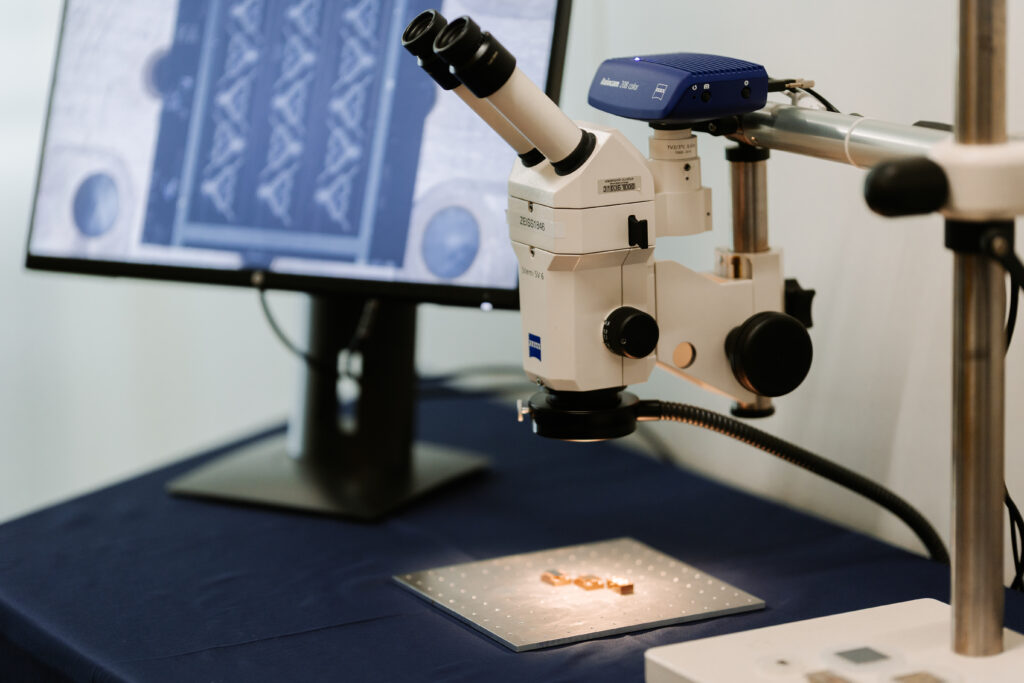
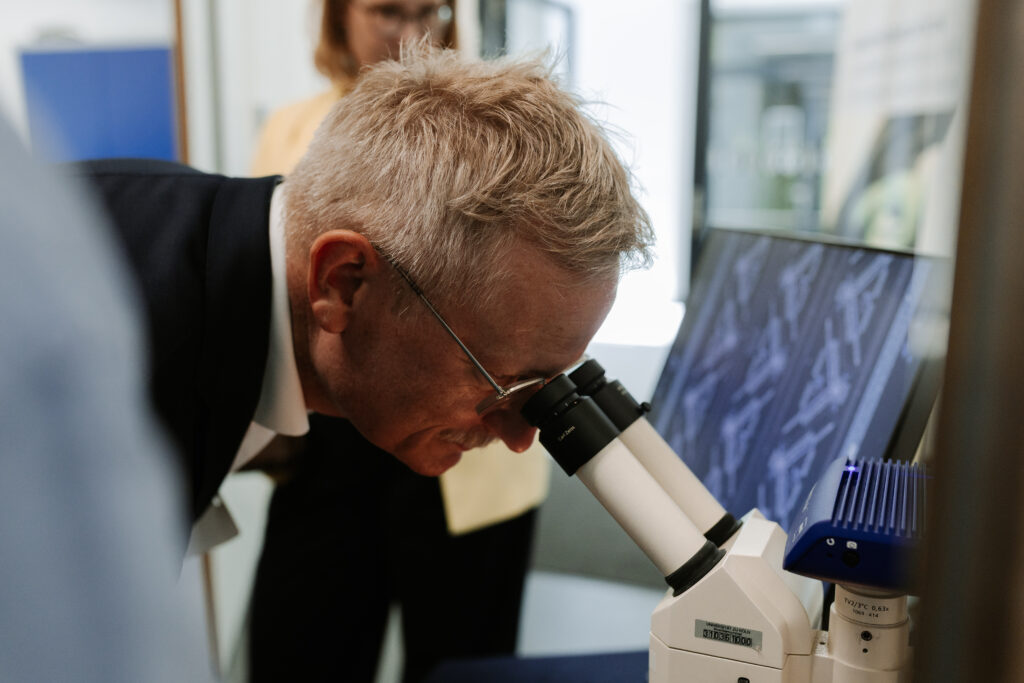
An example of a microscale detector developed at the UoC that incorporates superconducting high-frequency circuits and is used to observe low-energy radiation from interstellar gas.
Exhibition
Following the lab tour, the guests were invited to stay a while longer to view an exhibition showcasing additional examples of the cluster’s scientific applications and to chat about research over coffee and cake.
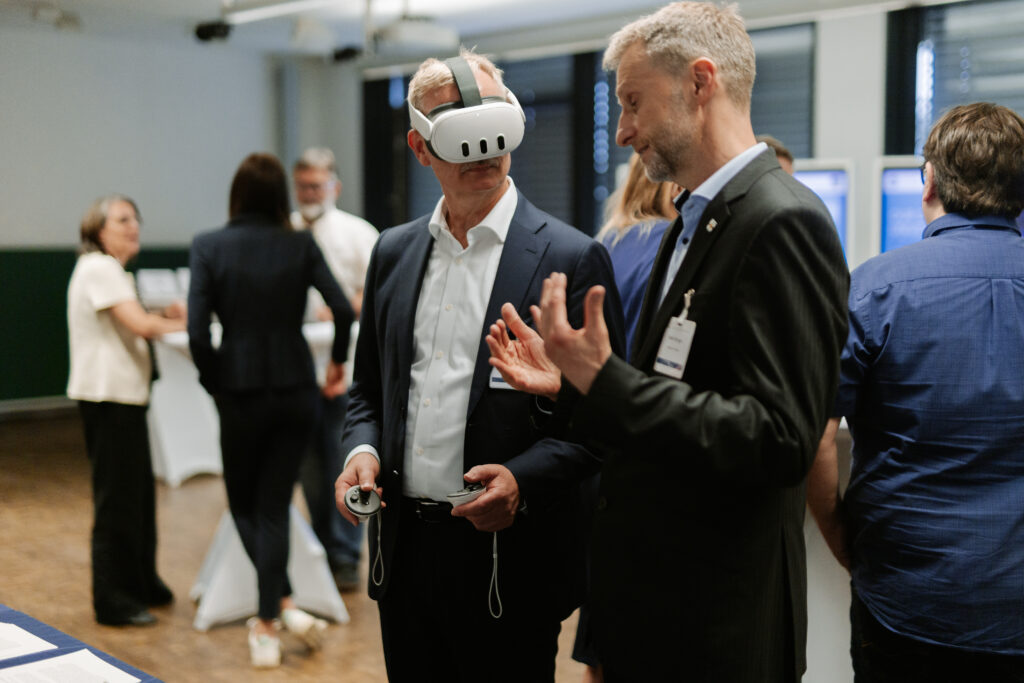
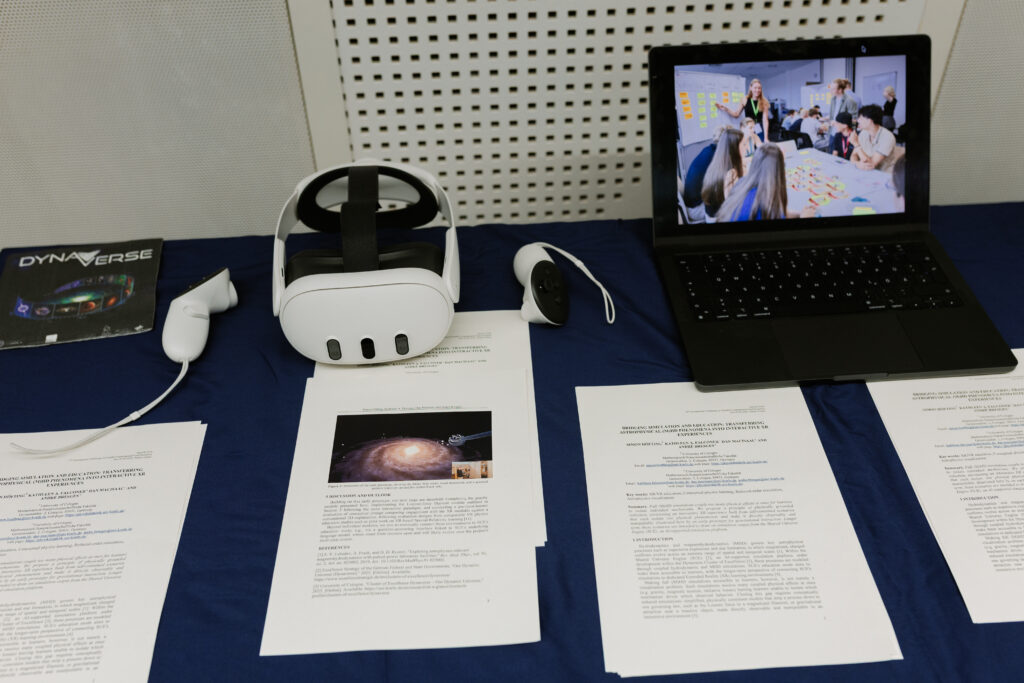
A VR tool for physics classes that illustrates the Milky Way, gravity, and the Milky Way’s center of mass. It teaches students about the building blocks of our galaxies and the forces at work within them.
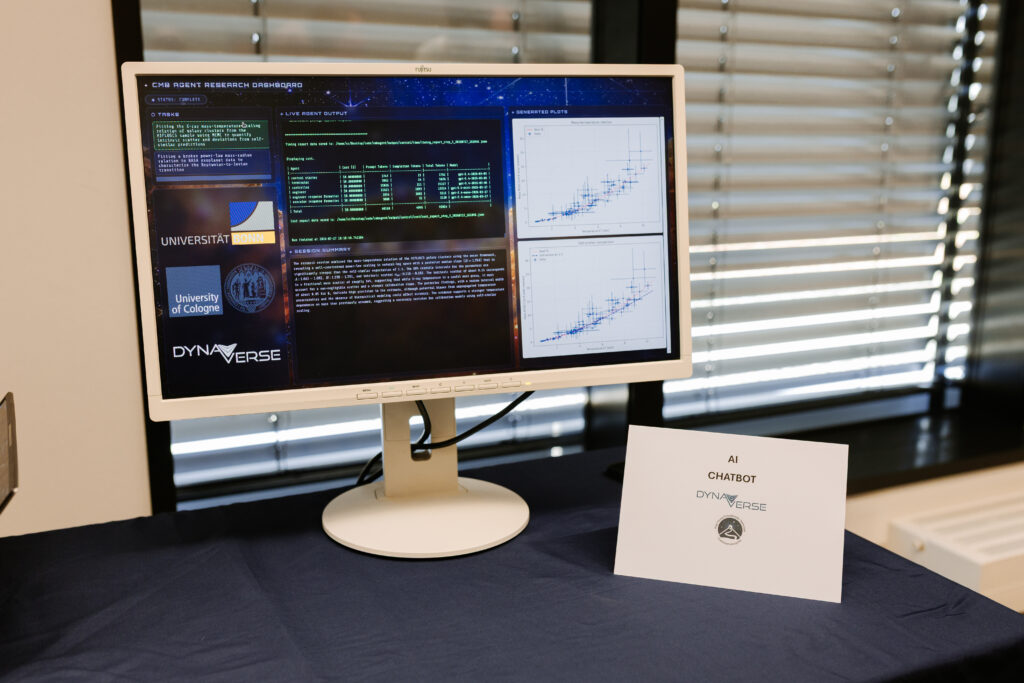
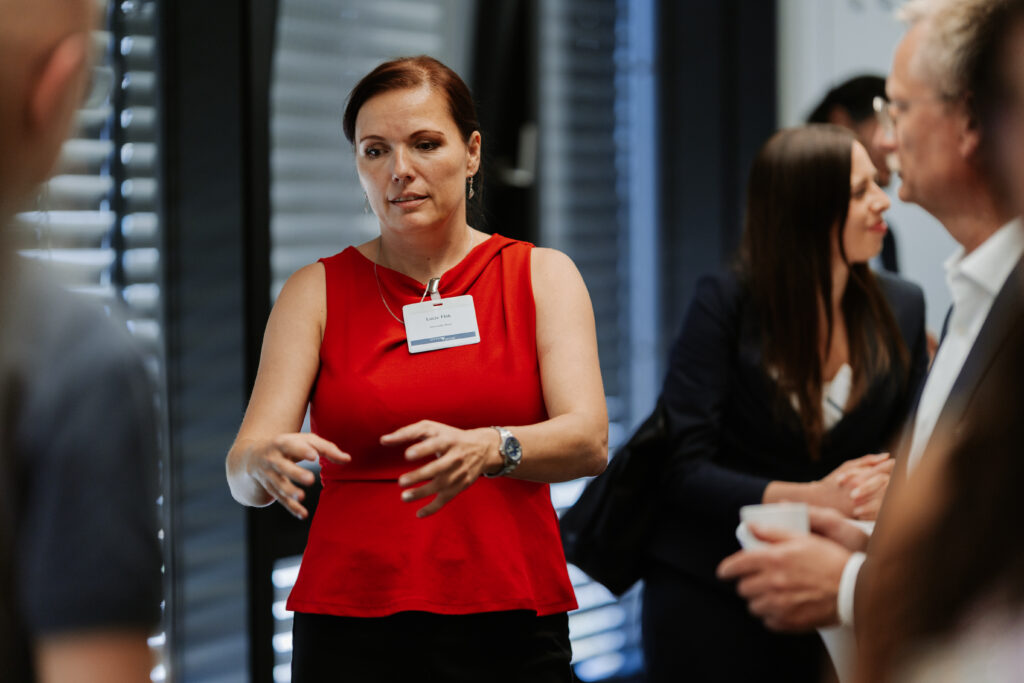
An LLM-based tool for fitting observational data. Presented by Prof. Lucie Flek and her postdoctoral fellow.
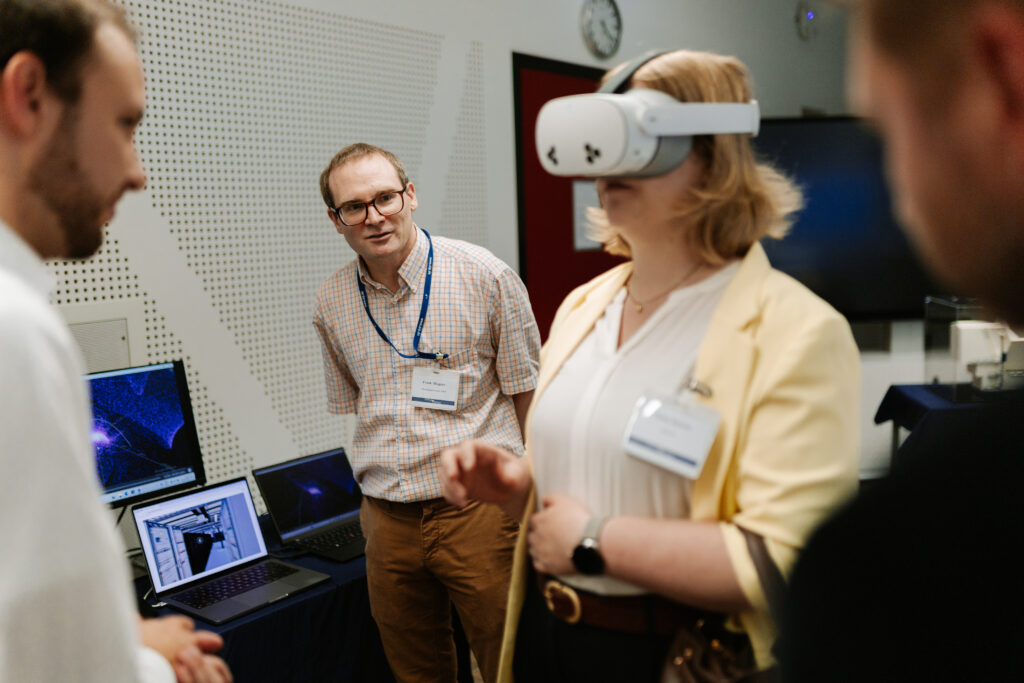
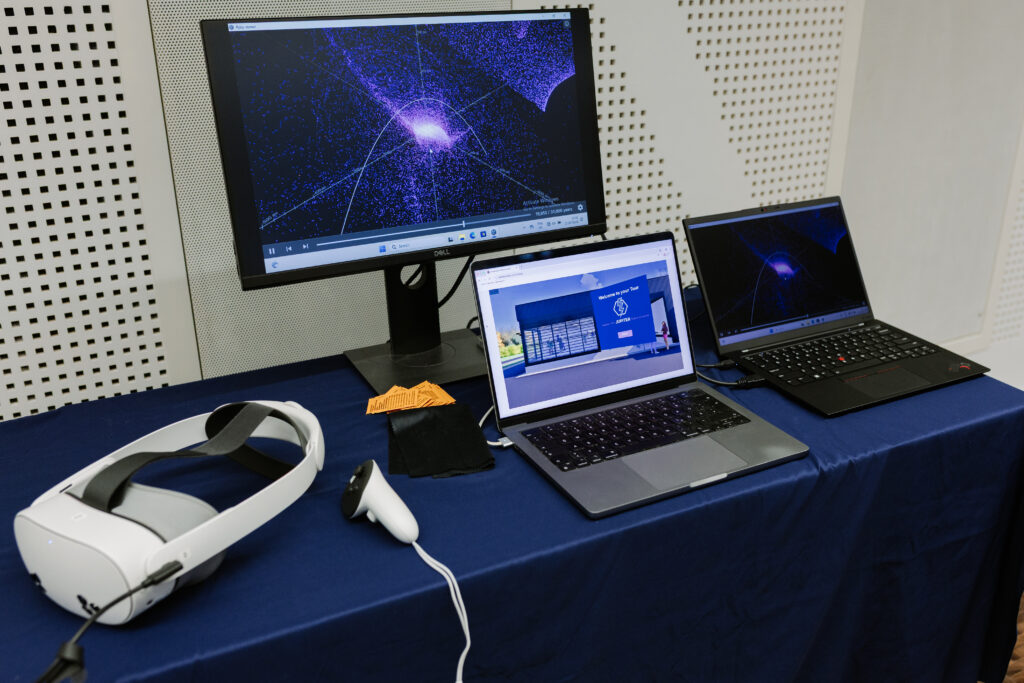
A virtual tour of the newest supercomputing center at Forschungszentrum Jülich, Jupiter
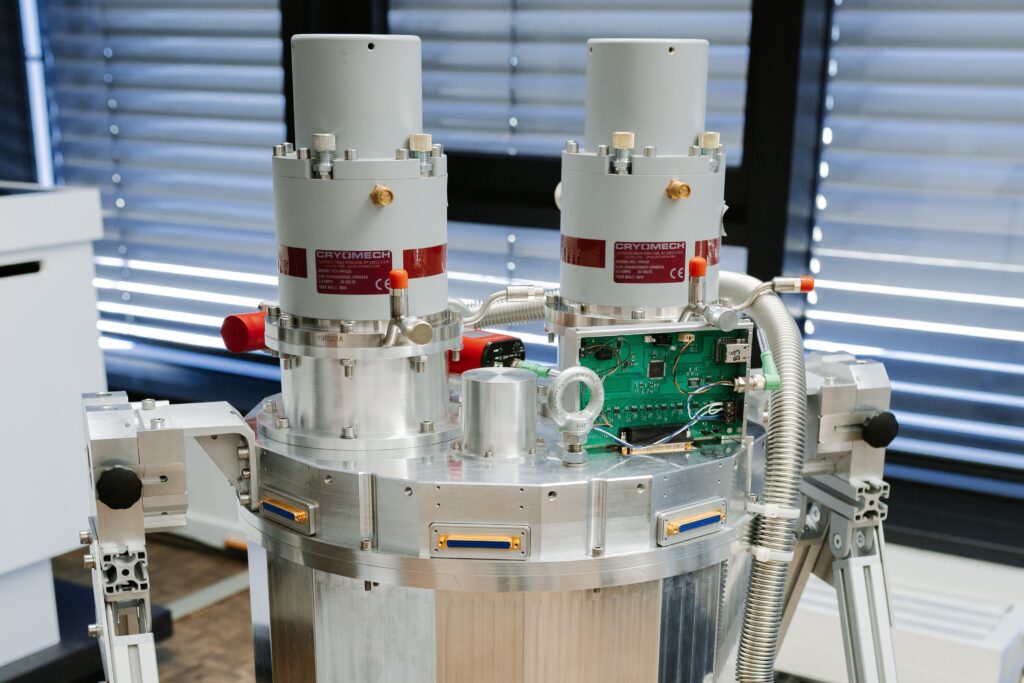
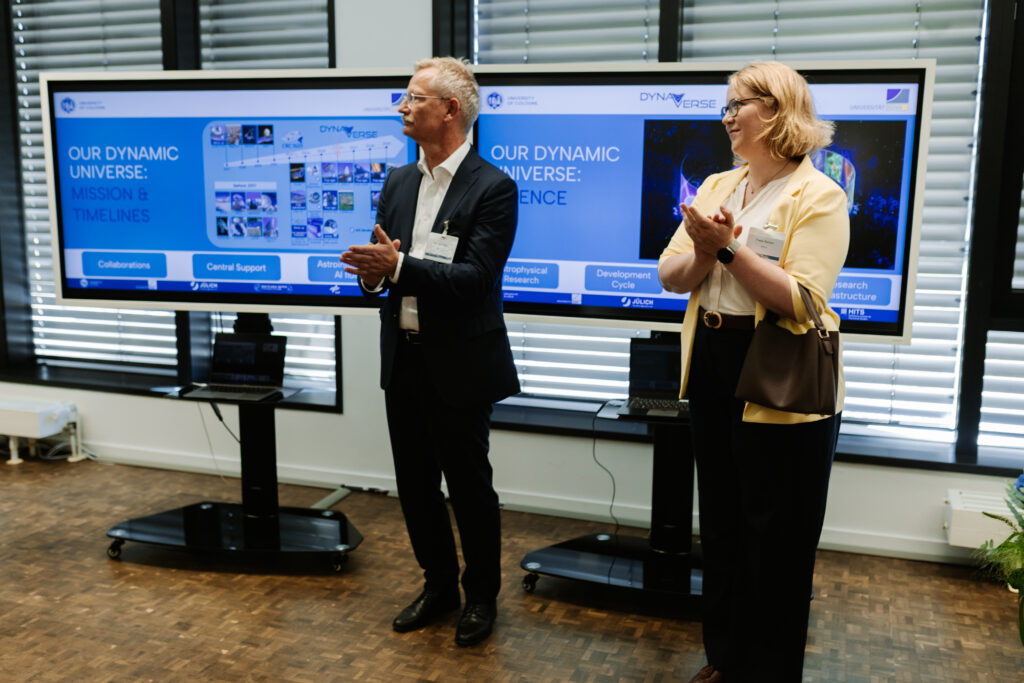
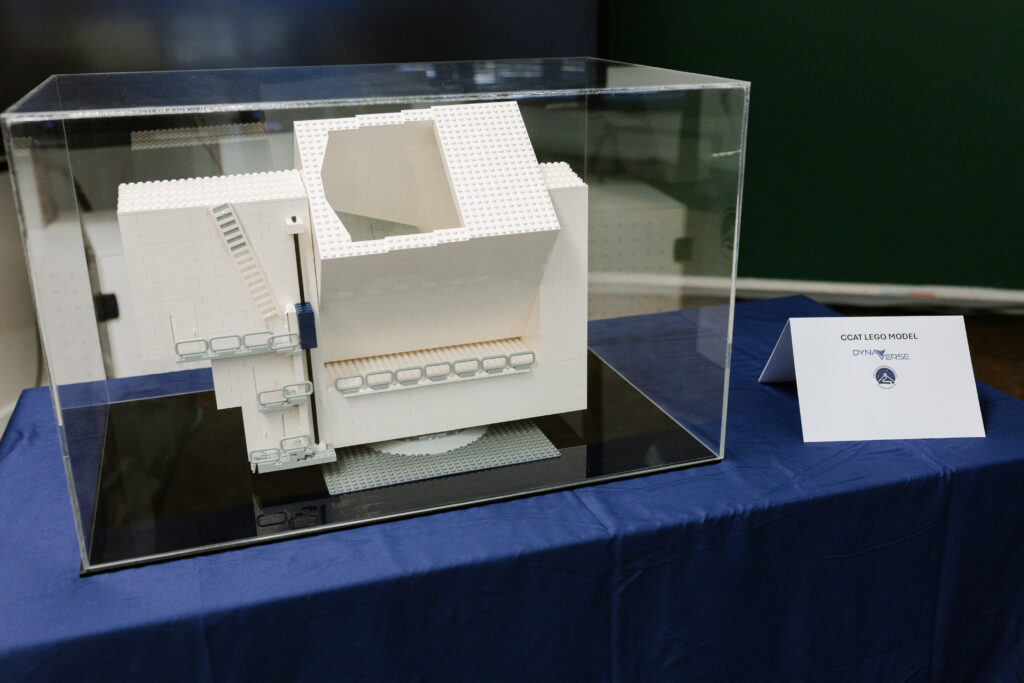
Left picture: A cryosat used to keep low temperatures of devices used in telescopes. Middle (fltr.): Dr. Hess and Dr. Backen. Right: A model of the Fred Young Submillimeter Telescope developed by the CCAT Consortium including universities such as the UoC and UB.
Photo credit: Oskar Gebel
